Research is the cornerstone of scientific progress, but finding the right papers can be a daunting task. That’s where ResearchRabbit comes in. This free online platform offers researchers an efficient and user-friendly way to explore and discover academic papers. With a simple search bar that allows users to enter paper titles or URLs, researchers can access a vast array of related papers in a visual map. This feature enables users to navigate through relevant literature quickly, saving valuable time and effort.
Moreover, ResearchRabbit also provides a unique feature that allows users to explore author networks and their connections. This feature helps users identify key researchers in a particular field and learn about their collaborations and affiliations. Sharing collections of papers with others on the platform is easy, making it easier to collaborate and stay up-to-date on the latest research in a particular field.
Additionally, ResearchRabbit offers personalized recommendations based on users’ interests and activities on the platform. Users can also explore funding opportunities, job postings, and publishing opportunities, making the platform a one-stop-shop for all research needs.
Overall, ResearchRabbit is a powerful tool that facilitates research collaboration and advancement in various fields. By providing access to a vast array of academic literature and resources, the platform enables researchers to find their next breakthrough easily.
Have you ever wished for a search engine that can understand you and provide personalized results? Andisearch.com offers just that with its AI assistant named Andi. Andi is not just a chatbot but a powerful tool that uses cutting-edge technologies to provide you with accurate and ad-free search results. In this blog post, we’ll take a closer look at what Andisearch.com has to offer and how it can revolutionize your search experience.
Andi uses a combination of generative AI, live data, and semantic search technology to understand your queries and provide relevant results. This means that Andi can understand the context of your questions and provide answers that are tailored to your needs. For example, if you ask Andi about the best pizza places in town, Andi will not only provide a list of restaurants but also their ratings, reviews, and contact information.
Andi is designed to be privacy-focused and ad-free. Unlike traditional search engines that use your search history and personal data to show you ads, Andi doesn’t collect any personal information. Andi’s only goal is to help you find the information you need without compromising your privacy.
Another great feature of Andi is its chat-based interface. You can chat with Andi as if you were chatting with a friend. Andi can understand natural language, which means you don’t have to use specific keywords or search terms. You can ask Andi anything, from simple questions like “What’s the weather like today?” to complex ones like “How can I learn to code?” Andi will provide you with accurate and helpful answers.
Andisearch.com is a search engine for the next generation. It offers a personalized and intuitive search experience that is designed to meet your needs. Andi is not just a chatbot but a reliable and powerful AI assistant that can help you find anything you’re looking for. If you’re tired of traditional search engines that show you ads and don’t understand your needs, Andi is the search engine you’ve been looking for.
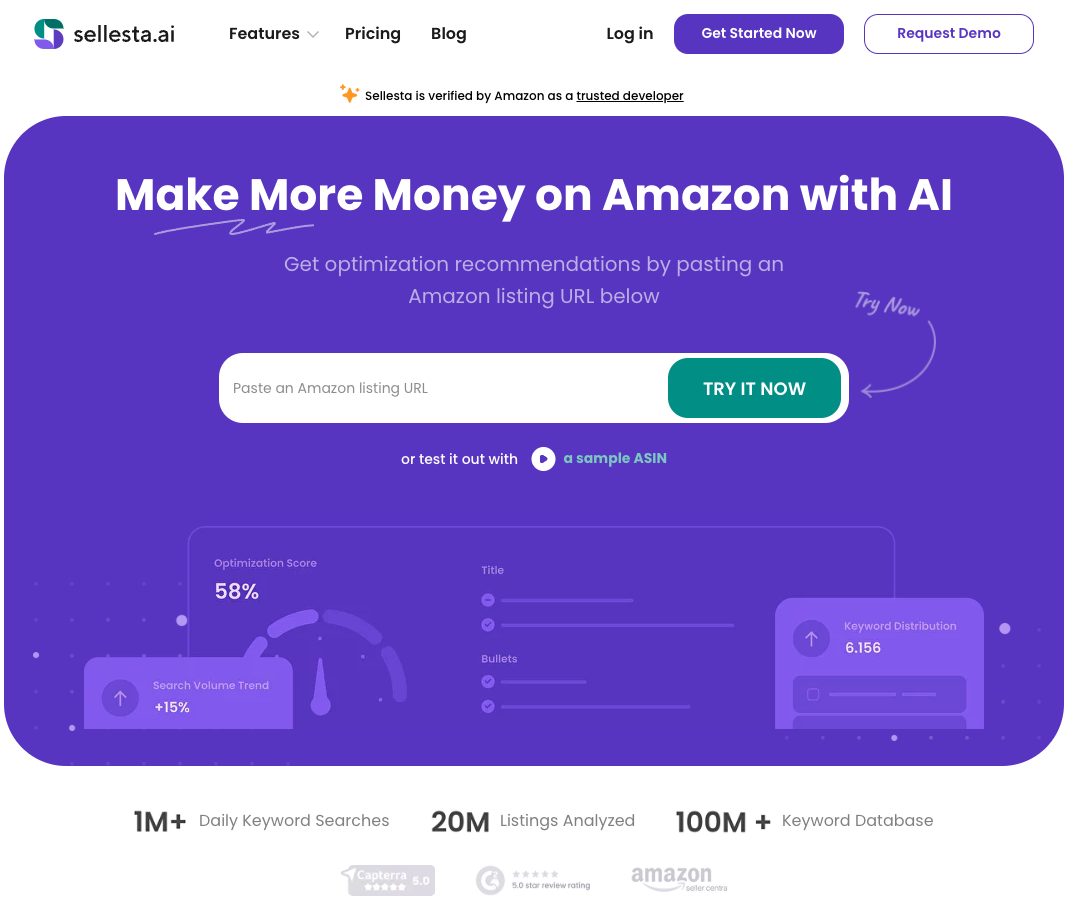
Sellesta.ai is an AI-powered tool that simplifies the process of finding the most relevant keywords for Amazon. Its advanced algorithms provide keyword suggestions that are tailored to Amazon’s search algorithm. With Sellesta.ai, you can optimize your product listings and increase your chances of getting more visibility and sales on Amazon.
The tool is user-friendly, and its keyword suggestions are generated in seconds. All you need to do is enter your product or business niche in the search bar, and Sellesta.ai will provide a list of the most relevant keywords. The tool also provides data on search volume, keyword difficulty, and cost per click, making it easier for you to choose the most suitable keywords for your products.
What sets Sellesta.ai apart from other keyword research tools is its ability to learn from user behavior. The tool analyzes user preferences, search history, and content patterns to provide personalized recommendations. This means that the more you use the tool, the more accurate the recommendations become.
In conclusion, Sellesta.ai is a must-have tool for anyone who wants to boost their Amazon SEO. Its advanced algorithms, personalized recommendations, and user-friendly interface make it the perfect solution for optimizing your product listings on Amazon.
Boost Your Amazon SEO with Sellesta.ai’s Relevant Keyword Suggestions Sellesta.ai is an AI-powered tool that simplifies the process of finding the most relevant keywords for Amazon. Its advanced algorithms provide keyword suggestions that are tailored to Amazon’s search algorithm. With Sellesta.ai, you can optimize your product listings and increase your chances of getting more visibility and sales on Amazon. The tool is user-friendly, and its keyword suggestions are generated in seconds. All you need to do is enter your product or business niche in the search bar, and Sellesta.ai will provide a list of the most relevant keywords. The tool also provides data on search volume, keyword difficulty, and cost per click, making it easier for you to choose the most suitable keywords for your products. What sets Sellesta.ai apart from other keyword research tools is its ability to learn from user behavior. The tool analyzes user preferences, search history, and content patterns to provide personalized recommendations. This means that the more you use the tool, the more accurate the recommendations become. In conclusion, Sellesta.ai is a must-have tool for anyone who wants to boost their Amazon SEO. Its advanced algorithms, personalized recommendations, and user-friendly interface make it the perfect solution for optimizing your product listings on Amazon. #Sellesta#AmazonSEO#KeywordSuggestions#ProductListings#ArtificialIntelligence#UserFriendly#RelevantKeywords#SalesBoost#OptimizeAmazonListings#SearchVolume#KeywordDifficulty#PersonalizedRecommendations LearningFromUserBehavior.
Online searching has become an integral part of our daily lives, and we rely on search engines to provide us with relevant information in a matter of seconds. However, the results we get from these engines can sometimes be overwhelming, and we often struggle to find the information we need. This is where Chatonai.org comes in.
Chatonai.org is a new add-on that enhances your online search experience by integrating ChatGPT, OpenAI’s advanced language model, into your favorite search engine. This means that you can now have a conversation with a virtual assistant while searching for information online.
With Chatonai.org, you can ask specific questions and receive accurate and concise answers in real-time. The AI-powered chatbot is designed to understand natural language and provide helpful and relevant responses. Whether you’re looking for information about a specific topic, need help with a task, or simply want to chat, Chatonai.org has got you covered.
One of the key benefits of using Chatonai.org is that it saves you time and effort. Instead of having to go through pages and pages of search results, you can get the information you need quickly and easily. And, if you need more information, you can simply ask the chatbot for clarification.
Another advantage of Chatonai.org is its user-friendly interface. The chatbot is easy to use and intuitive, so you don’t need any technical know-how to benefit from its features. Simply add the add-on to your browser, and you’re ready to start using it.
In conclusion, Chatonai.org is a game-changer for online searching. By integrating ChatGPT into your favorite search engine, it offers a new and more efficient way to find information. Whether you’re a student, a professional, or just someone looking for answers to their questions, Chatonai.org is an excellent tool that you won’t want to miss out on. Try it today and discover a new era in AI-powered chatbots.
https://chatonai.org/ Introducing Chatonai.org: Bringing ChatGPT to Your Online Search Experience Online searching has become an integral part of our daily lives, and we rely on search engines to provide us with relevant information in a matter of seconds. However, the results we get from these engines can sometimes be overwhelming, and we often struggle to find the information we need. This is where Chatonai.org comes in. Chatonai.org is a new add-on that enhances your online search experience by integrating ChatGPT, OpenAI’s advanced language model, into your favorite search engine. This means that you can now have a conversation with a virtual assistant while searching for information online. With Chatonai.org, you can ask specific questions and receive accurate and concise answers in real-time. The AI-powered chatbot is designed to understand natural language and provide helpful and relevant responses. Whether you’re looking for information about a specific topic, need help with a task, or simply want to chat, Chatonai.org has got you covered. One of the key benefits of using Chatonai.org is that it saves you time and effort. Instead of having to go through pages and pages of search results, you can get the information you need quickly and easily. And, if you need more information, you can simply ask the chatbot for clarification. Another advantage of Chatonai.org is its user-friendly interface. The chatbot is easy to use and intuitive, so you don’t need any technical know-how to benefit from its features. Simply add the add-on to your browser, and you’re ready to start using it. In conclusion, Chatonai.org is a game-changer for online searching. By integrating ChatGPT into your favorite search engine, it offers a new and more efficient way to find information. Whether you’re a student, a professional, or just someone looking for answers to their questions, Chatonai.org is an excellent tool that you won’t want to miss out on. Try it today and discover a new era in AI-powered chatbots. #Chatonai#ChatGPT#OnlineSearching#AI#IntelligentChatbot#EffortlessSearching#TimeSaving#UserFriendly#ConversationalSearching#RevolutionaryAI
Google’s AI Chatbot “Bard” Experiences Setback in Competition with Microsoft
Artificial Intelligence has become an increasingly important aspect of modern technology, with major tech companies like Google and Microsoft investing heavily in AI development. However, a recent incident involving Google’s AI chatbot “Bard” has shown the potential risks and challenges of incorporating AI into business operations.
Google’s Bard was created to compete with Microsoft’s own AI offering in the market. However, a malfunction caused shares to plummet in the battle between the two tech giants. The exact details of the error have not yet been disclosed, but its impact on Google’s stock prices has been significant, causing concern among investors and industry experts.
This incident highlights the need for caution and careful consideration when integrating AI technology into business operations. While AI has the potential to greatly improve efficiency and performance, it also brings with it a number of unknowns and potential risks. Companies must take the time to thoroughly test and evaluate AI systems before they are put into use, in order to minimize the risk of errors and malfunctions.
Additionally, it is important for companies to have contingency plans in place in the event of a malfunction. This may include procedures for quickly identifying and fixing errors, as well as measures to mitigate the impact of such incidents on the company’s reputation and financial performance.
Despite this setback, Google remains a major player in the AI market, and the incident is unlikely to discourage its continued investment in the technology. However, it serves as a reminder of the need for caution and caution when incorporating AI into business operations, and the importance of thoroughly testing and evaluating AI systems before putting them into use.
In conclusion, the incident involving Google’s AI chatbot “Bard” is a wake-up call for the tech industry, reminding us of the potential risks and challenges of incorporating AI into business operations. Companies must take care to thoroughly test and evaluate AI systems, and have contingency plans in place in the event of a malfunction. Only through careful consideration and responsible use of AI can we fully realize its potential to transform the way we live and work.
Microsoft’s Bing app, which had previously struggled with low popularity, has seen a remarkable increase in downloads after incorporating AI news into its features. The app, which provides users with a personalized news experience, has reportedly seen a ten-fold jump in downloads since the AI news feature was added.
Bing’s AI-powered news feature allows users to stay updated with the latest news and events, while also providing them with a personalized news feed based on their interests and preferences. This has made the app more appealing to users, leading to the significant increase in downloads.
The app’s AI-based news feature has received positive feedback from users, who have praised its ability to provide them with relevant and up-to-date news. With its improved features, Bing is positioning itself as a strong player in the digital news space, and its recent success is a testament to its ability to adapt to changing market trends.
In conclusion, Microsoft’s Bing app has seen a major boost in popularity due to its AI-powered news feature. The app’s personalized and relevant news experience has resonated with users, leading to a ten-fold increase in downloads.
Google Launches AI-Powered Chatbot Bard to Compete with ChatGPT
Google is entering the AI chatbot market with the launch of Bard, a chatbot that will rival the popular ChatGPT. Bard will be tested by a group of users before its public release in the coming weeks, and it is built on Google’s existing language model, Lamda. One engineer has even described Lamda as being so human-like in its responses that he believed it was sentient.
In addition to launching Bard, Google is also introducing new AI tools for its search engine. AI chatbots are designed to answer questions and find information, using the internet as a vast database of knowledge. However, there are concerns that this may also include offensive material and disinformation.
In a blog post, Google CEO Sundar Pichai emphasized his desire for the company’s AI services to be “bold and responsible”, but did not elaborate on how Bard would prevent the sharing of harmful content. The chatbot will initially operate on a lightweight version of Lamda, which requires less power and can be used by more people at once.
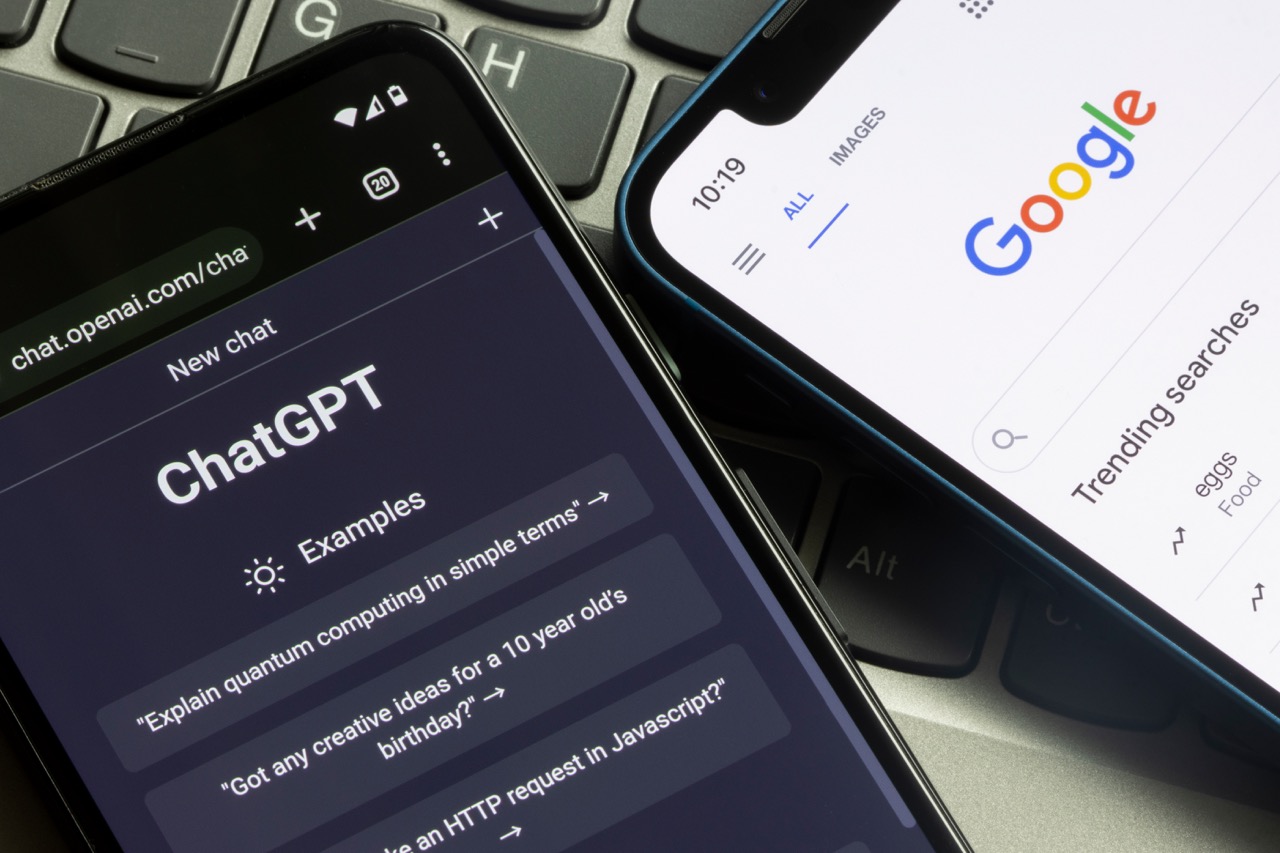
Google’s announcement follows wide speculation that Microsoft is bringing ChatGPT to its search engine Bing. ChatGPT can answer questions and carry out requests in text form, using information from the internet as of 2021. It can generate speeches, songs, marketing copy, news articles, and student essays. Currently, ChatGPT is free for people to use, but OpenAI recently announced a subscription tier to complement free access.
The ultimate goal of chatbots is believed to be replacing web links with a definitive answer in internet searches. Pichai noted that people are asking more nuanced questions in Google search, and AI can synthesize insights for questions with no one right answer. He wrote that soon, AI-powered features in search will distill complex information and multiple perspectives into easily digestible formats.
In conclusion, with the launch of Bard, Google is entering a competitive AI chatbot market. The chatbot will initially operate on a lightweight version of Lamda and will be tested by a group of users before its public release. Pichai emphasized his desire for Google’s AI services to be “bold and responsible”. The ultimate goal of chatbots is believed to be replacing web links with a definitive answer in internet searches, and Google is working towards this goal by distilling complex information into easily digestible formats.
Google, known for its search engine, is reportedly concerned about the impact of OpenAI’s ChatGPT, a Q&A machine that uses natural language to respond to questions. ChatGPT’s user-friendly interface and fluid prose has led to speculation that it may end Google’s dominance in search. In response, Google has declared a “code red” and is focusing on AI with plans to release 20 AI-powered products this year, including a ChatGPT-like search bot. However, questions remain about the technology’s readiness for widespread use and whether it can be trusted for accurate information.
Google is one of the biggest companies on Earth. Google’s search engine is the front door to the internet. And according to recent reports, Google is scrambling. Late last year, OpenAI, an artificial intelligence company at the forefront of the field, released ChatGPT. Alongside Elon Musk’s Twitter acquisition and fallout from FTX’s crypto implosion, breathless chatter about ChatGPT and generative AI has been ubiquitous. The chatbot, which was born from an upgrade to OpenAI’s GPT-3 algorithm, is like a futuristic Q&A machine. Ask any question, and it responds in plain language. Sometimes it gets the facts straight. Sometimes not so much. Still, ChatGPT took the world by storm thanks to the fluidity of its prose, its simple interface, and a mainstream launch.
When a new technology hits public consciousness, people try to sort out its impact. Between debates about how bots like ChatGPT will impact everything from academics to journalism, not a few folks have suggested ChatGPT may end Google’s reign in search. Who wants to hunt down information fragmented across a list of web pages when you could get a coherent, seemingly authoritative, answer in an instant?
In December, The New York Times reported Google was taking the prospect seriously, with management declaring a “code red” internally. This week, as Google announced layoffs, CEO Sundar Pichai told employees the company will sharpen its focus on AI. The NYT also reported Google founders, Larry Page and Sergey Brin, are now involved in efforts to streamline development of AI products. The worry is that they’ve lost a step to the competition.
If true, it isn’t due to a lack of ability or vision. Google’s no slouch at AI. The technology here—a flavor of deep learning model called a transformer—was developed at Google in 2017. The company already has its own versions of all the flashy generative AI models, from images (Imagen) to text (LaMDA). Indeed, in 2021, Google researchers published a paper pondering how large language models (like ChatGPT) might radically upend search in the future. “What if we got rid of the notion of the index altogether and replaced it with a pre-trained model that efficiently and effectively encodes all of the information contained in the corpus?” Donald Metzler, a Google researcher, and coauthors wrote at the time. “What if the distinction between retrieval and ranking went away and instead there was a single response generation phase?” This should sound familiar.
Whereas smaller organizations opened access to their algorithms more aggressively, however, Google largely kept its work under wraps. Offering only small, tightly controlled demos to limited groups of people, it deemed the tech too risky and error-prone for wider release just yet. Damage to its brand and reputation was a chief concern.
Chat GPT Chat with AI Artificial Intelligence. Businessman using chatbot in computer smart intelligence Ai, artificial intelligence developed by OpenAI. Futuristic technology, robot in online system.
Now, sweating it out under the bright lights of ChatGPT, the company is planning to release some 20 AI-powered products later thisyear, according to the NYT. These will encompass all the top generative AI applications, like image, text, and code generation—and they’ll test a ChatGPT-like bot in search. But is the technology ready to go from splashy demo tested by millions to a crucial tool trusted by billions? In their 2021 paper, the Google researchers suggested an ideal chatbot search assistant would be authoritative, transparent, unbiased, accessible, and contain diverse perspectives. Acing each of those categories is still a stretch for even the most advanced large language models. Trust matters with search in particular. When it serves up a list of web pages today, Google can blame content creators for poor quality and vow to serve better results in the future. With an AI chatbot, it is the content creator, and if ChatGPT can’t get its facts straight, it may not be able to gain the trust of users, ultimately leading to its failure.