Microsoft’s Bing app, which had previously struggled with low popularity, has seen a remarkable increase in downloads after incorporating AI news into its features. The app, which provides users with a personalized news experience, has reportedly seen a ten-fold jump in downloads since the AI news feature was added.
Bing’s AI-powered news feature allows users to stay updated with the latest news and events, while also providing them with a personalized news feed based on their interests and preferences. This has made the app more appealing to users, leading to the significant increase in downloads.
The app’s AI-based news feature has received positive feedback from users, who have praised its ability to provide them with relevant and up-to-date news. With its improved features, Bing is positioning itself as a strong player in the digital news space, and its recent success is a testament to its ability to adapt to changing market trends.
In conclusion, Microsoft’s Bing app has seen a major boost in popularity due to its AI-powered news feature. The app’s personalized and relevant news experience has resonated with users, leading to a ten-fold increase in downloads.
You’re inside the doctor’s surgery, sitting across from your physician. He breaks the news to you: you need brain surgery to remove a tumor. You’re faced with two options: a highly advanced AI robot surgeon or a human doctor named Dr. John Smith.
Option 1: The AI robot surgeon This option presents a fascinating, cutting-edge solution. The robot surgeon has been trained on every single brain operation that has ever been completed. It has access to vast amounts of data including video archives, interviews, books, patient results, and scans. The robot can work with a precision of 0.001 microns, make decisions in real-time, and boasts a success rate of 78.3%.
Option 2: Dr. John Smith Dr. John Smith is a human doctor who had a long day at work yesterday and is feeling stressed from his heavy workload. He has a success rate of 40.3%.
When faced with this decision, you must weigh the pros and cons of each option. On one hand, the AI robot surgeon is highly precise, has access to vast amounts of data, and has a high success rate. On the other hand, there’s something to be said for the human touch that Dr. John Smith can provide. Ultimately, the choice is yours.
In this scenario, the future of doctors is brought into sharp focus. Technology has the potential to revolutionize the medical field and make surgeries safer and more successful, but it also raises questions about the role of human doctors. The decision you make will depend on your personal values and priorities, but it’s clear that the future of brain surgery is going to be shaped by technology in a big way.
Artificial General Intelligence: Understanding the Future of AI
Artificial intelligence (AI) has made remarkable progress in recent years, but most current AI systems are designed to perform specific tasks, such as playing chess or recognizing speech. However, the ultimate goal of AI research is to create systems that can perform any intellectual task that a human can. This concept is known as Artificial General Intelligence (AGI).
AGI is not just about creating smarter machines, but about building systems that have the same general cognitive abilities as human beings. Unlike current AI systems, which are based on narrow AI, AGI would have the ability to learn, reason, understand, and solve problems in a way that is similar to humans. In other words, AGI would have the ability to adapt to new situations and tasks, just like a human being.
One of the key challenges in AGI research is to find ways to enable AI systems to acquire and use knowledge in a human-like manner. This involves creating systems that can process and understand natural language, recognize and categorize objects, and make decisions based on incomplete information. It also involves creating systems that can learn from experience, and use that knowledge to improve their performance over time.
AGI has the potential to bring about significant advancements in fields such as medicine, finance, and transportation, to name a few. For example, AGI could help doctors diagnose diseases more accurately, and financial analysts could use AGI to identify market trends and make better investment decisions. In addition, AGI has the potential to improve the quality of life for people by making tasks such as driving a car or performing household chores easier and more efficient.
Despite the numerous benefits, there are also concerns about the development of AGI. Some experts have raised ethical and safety concerns about the potential for AGI systems to be used for harmful purposes, such as autonomous weapons or systems that can manipulate human behavior. It is also important to consider the impact that AGI could have on employment and the economy.
In conclusion, AGI is a fascinating and important area of research that has the potential to bring about significant advancements in various fields. However, it is important to approach AGI with caution and to consider the ethical and safety implications of this technology. By carefully balancing the benefits and risks of AGI, we can ensure that this technology is used for the betterment of humanity.
Google Launches AI-Powered Chatbot Bard to Compete with ChatGPT
Google is entering the AI chatbot market with the launch of Bard, a chatbot that will rival the popular ChatGPT. Bard will be tested by a group of users before its public release in the coming weeks, and it is built on Google’s existing language model, Lamda. One engineer has even described Lamda as being so human-like in its responses that he believed it was sentient.
In addition to launching Bard, Google is also introducing new AI tools for its search engine. AI chatbots are designed to answer questions and find information, using the internet as a vast database of knowledge. However, there are concerns that this may also include offensive material and disinformation.
In a blog post, Google CEO Sundar Pichai emphasized his desire for the company’s AI services to be “bold and responsible”, but did not elaborate on how Bard would prevent the sharing of harmful content. The chatbot will initially operate on a lightweight version of Lamda, which requires less power and can be used by more people at once.
Google’s announcement follows wide speculation that Microsoft is bringing ChatGPT to its search engine Bing. ChatGPT can answer questions and carry out requests in text form, using information from the internet as of 2021. It can generate speeches, songs, marketing copy, news articles, and student essays. Currently, ChatGPT is free for people to use, but OpenAI recently announced a subscription tier to complement free access.
The ultimate goal of chatbots is believed to be replacing web links with a definitive answer in internet searches. Pichai noted that people are asking more nuanced questions in Google search, and AI can synthesize insights for questions with no one right answer. He wrote that soon, AI-powered features in search will distill complex information and multiple perspectives into easily digestible formats.
In conclusion, with the launch of Bard, Google is entering a competitive AI chatbot market. The chatbot will initially operate on a lightweight version of Lamda and will be tested by a group of users before its public release. Pichai emphasized his desire for Google’s AI services to be “bold and responsible”. The ultimate goal of chatbots is believed to be replacing web links with a definitive answer in internet searches, and Google is working towards this goal by distilling complex information into easily digestible formats.
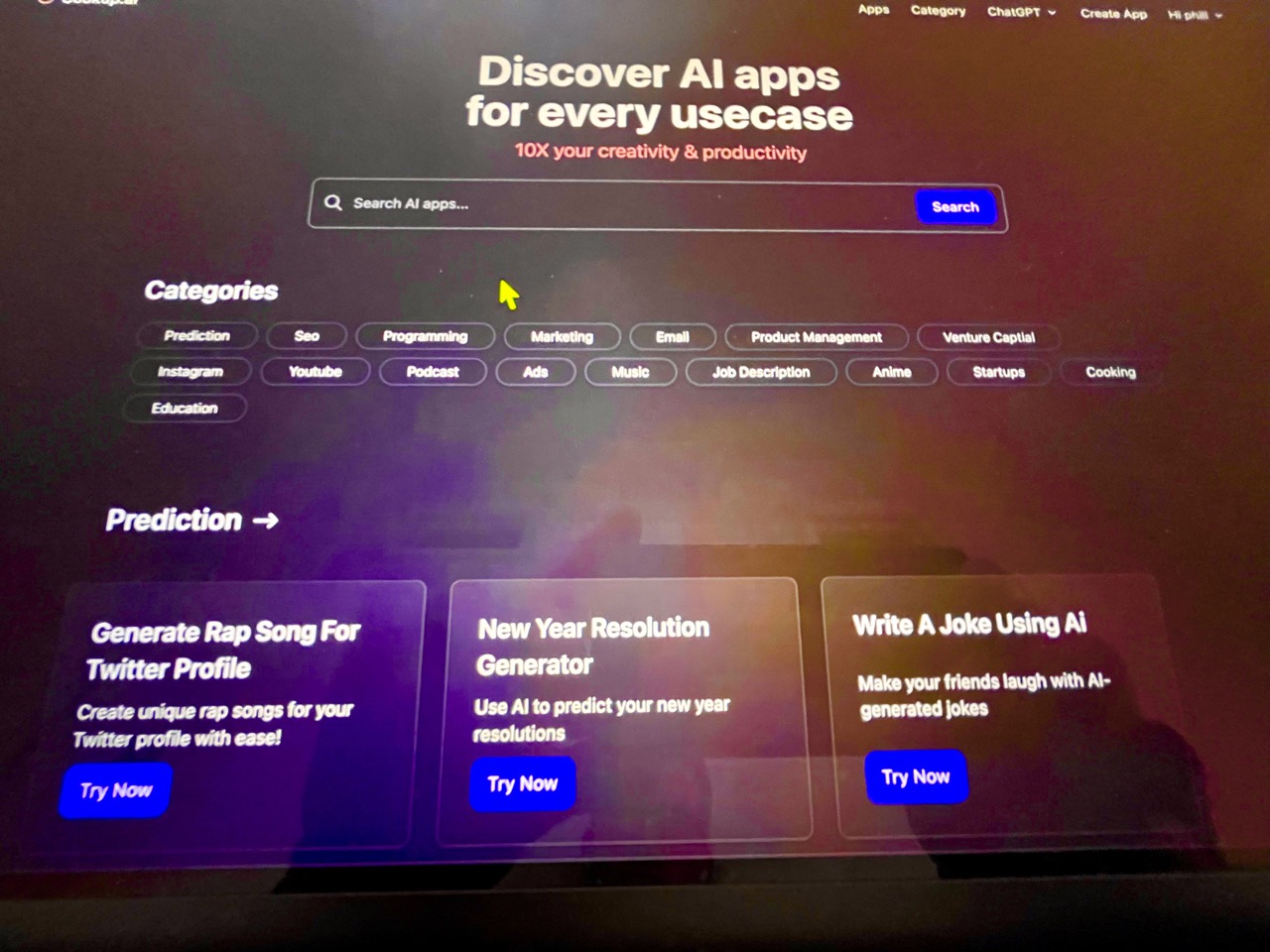
AI has been transforming the way we live and work. It has revolutionized the way we interact with technology and has made our lives much easier and convenient. CookUp.ai is an AI platform that is at the forefront of this transformation. With CookUp.ai, you can now create AI apps without any coding knowledge or technical expertise.
CookUp.ai is a platform that allows users to create AI apps in a matter of minutes. It is designed for non-technical users who want to incorporate AI into their businesses. With its user-friendly interface, you can build your AI app in a matter of minutes, with no coding required. All you need to do is select the features you want to include in your app, and CookUp.ai will take care of the rest.
CookUp.ai is a highly customizable platform that allows you to create apps tailored to your specific needs. You can choose from a wide range of features, including chatbots, voice assistants, and image recognition. The platform also offers a range of pre-built templates that you can use to get started quickly. These templates have been designed to help you get your app up and running quickly, without having to invest a lot of time and effort into building it from scratch.
Another key feature of CookUp.ai is that it offers a wide range of integrations with other platforms and services. This means that you can easily connect your AI app with other platforms and services, such as social media networks, e-commerce platforms, and customer relationship management systems. This makes it easier for you to manage your AI app and ensure that it integrates seamlessly with your existing systems and processes.
Finally, CookUp.ai is an affordable solution for businesses of all sizes. With its pay-as-you-go pricing model, you only pay for what you use, and you can scale your usage up or down as needed. This makes it an ideal solution for businesses that want to incorporate AI into their operations but do not have the resources or budget to invest in an expensive, complex AI solution.
In conclusion, CookUp.ai is a powerful AI platform that allows you to create AI apps quickly and easily. It is designed for non-technical users and offers a range of customization options and integrations, making it an ideal solution for businesses of all sizes. With CookUp.ai, you can harness the power of AI to transform your business and stay ahead of the curve.
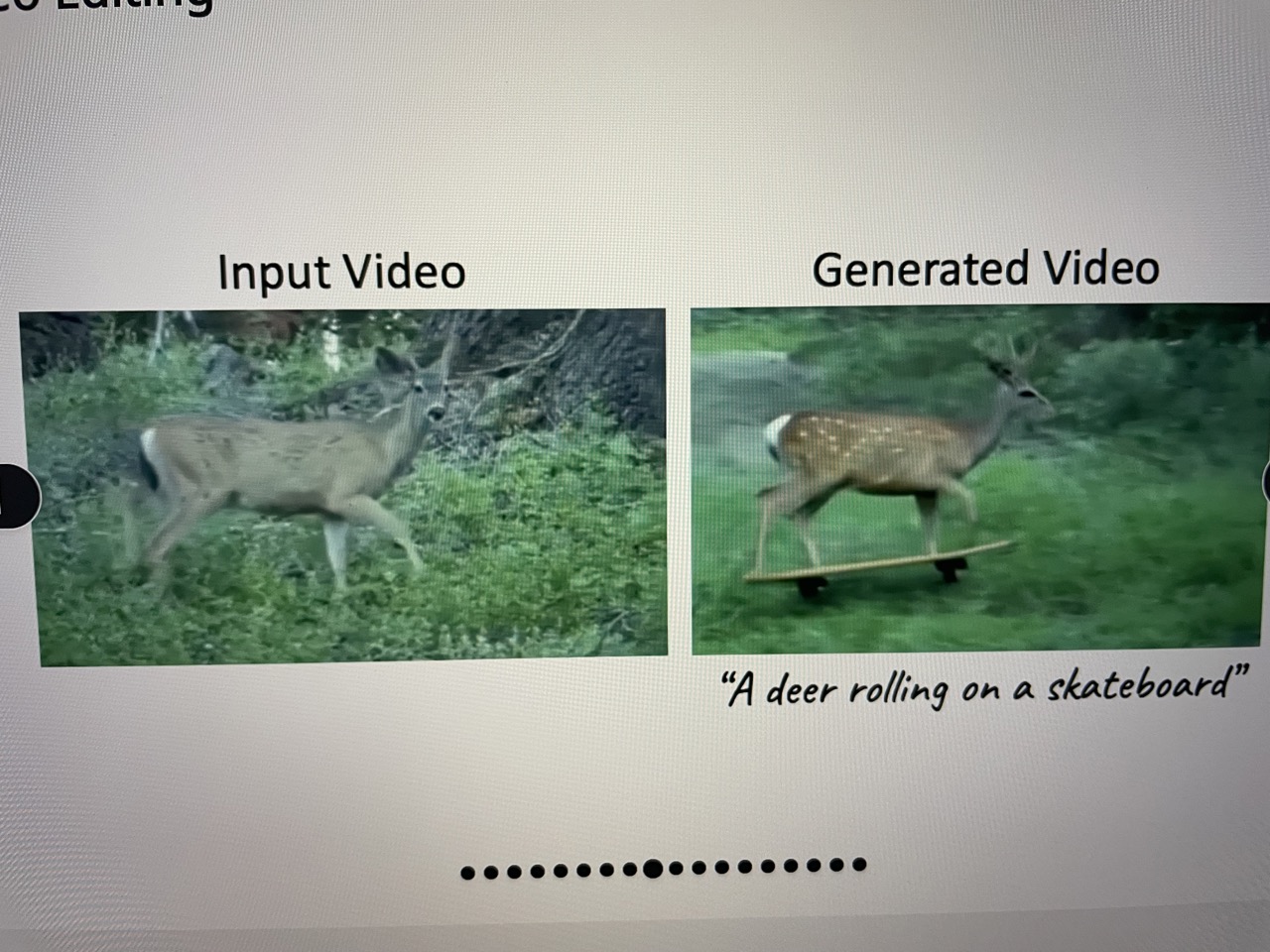
Dreamix Video Editing is a video editing model that is available soon and provides an array of tools and features to help users create and edit videos with ease. In this blog post, we will be exploring the different features and capabilities of the site and discussing how it can benefit individuals and organizations who need to create and edit videos for various purposes.
User-friendly interface:
One of the standout features of Dreamix Video Editing is its user-friendly interface. The platform is designed to be intuitive and easy to use, with all the necessary tools and options easily accessible from the main dashboard. This makes it easy for users of all levels, from beginners to experts, to quickly get started with the platform and start creating and editing videos.
Advanced video editing tools:
In addition to its user-friendly interface, Dreamix Video Editing also offers a wide range of advanced video editing tools that can be used to create professional-quality videos. These tools include basic video editing functions such as trimming and splitting, as well as more advanced options like adding text and special effects. This makes it possible for users to create videos with a professional look and feel, even if they don’t have extensive video editing experience.
Cloud-based platform:
Another key advantage of Dreamix Video Editing is that it is a cloud-based platform, which means that users can access their projects and edit their videos from anywhere, at any time. This makes it an ideal solution for individuals and organizations who need to work on videos on-the-go or from multiple locations. It also eliminates the need for expensive and bulky hardware, as all the necessary tools and resources are available online.
Integration with popular video hosting platforms:
Once a video has been created and edited, users can easily share it with their audience by uploading it to popular video hosting platforms such as YouTube and Vimeo. This can be done directly from the Dreamix Video Editing platform, making the process of sharing and distributing videos quick and easy.
Conclusion:
In conclusion, Dreamix Video Editing is a powerful and versatile platform that provides users with all the tools and resources they need to create and edit high-quality videos. Its user-friendly interface, advanced video editing tools, cloud-based platform, and integration with popular video hosting platforms make it an ideal solution for individuals and organizations who need to create and distribute videos for various purposes. Whether you’re a beginner or an experienced video editor, Dreamix Video Editing is definitely worth checking out.
Hey there! Have you ever heard of AI art? It’s a pretty cool and kind of a tricky thing. There’s a company called Stability AI that’s registered above a fried chicken shop in Notting Hill, London. They make a program called Stable Diffusion that can create pictures of anything you can think of, like Elon Musk in a Van Gogh painting! Pretty wild, right?
Stable Diffusion uses lots of other pictures to learn how to make new ones, and some of those pictures are from a company called Getty Images, which has over 135 million pictures in its database. Getty Images isn’t too happy about this, so they started a legal battle against stability AI to try to stop them from using their pictures.
AI art is becoming more and more popular, and it’s even starting to affect other art forms like music! But, the thing is, just like with human artists, AI art has to follow certain rules, like copyright and other laws. If the AI tool doesn’t change the original works enough to be considered original, then the people whose works were used can sue.
However, the big difference between AI art and human art is the scale. AI tools can process huge amounts of data and create countless new images and songs. That’s why people are starting to worry that AI might replace human creativity.
Of course, humans still have a lot of advantages over AI. No synthetic version of Harry Styles could ever be as popular as the real one. But, AI can still be useful for things like background music in video games.
The legal system is trying to catch up with AI art and figure out how to make sure that human artists aren’t left behind. The big question is whether companies like stability AI should be allowed to use all this copyrighted material without asking permission or paying for it. Some people think it should be allowed, but others say that the creators should get paid.
It’s a tricky situation, but one thing is for sure, AI is here to stay, and it’s important to make sure that everyone is protected. Recently, a Los Angeles illustrator had their work “fine-tuned” by a Stable Diffusion user, and it’s not clear if that’s okay or not. So, it’s important to keep an eye on this whole AI art thing and make sure everyone is treated fairly.
And who knows, maybe one day you’ll be able to make your own AI art too!
As the race to lead the Artificial Intelligence industry intensifies, Google has made a significant investment in Anthropic, a company operating in the AI space. Google’s investment of $300 million in Anthropic highlights the growing importance of AI and the increased competition among technology companies to develop advanced AI systems.
This investment is seen as a move by Google to keep up with its competitors, including OpenAI, which developed ChatGPT, one of the most advanced language models in existence. ChatGPT has set a high standard in the AI industry and has become a benchmark for other companies to follow.
Google’s investment in Anthropic is a sign of the company’s commitment to advancing AI technology and staying ahead of the competition. This investment is expected to result in the development of more advanced AI systems, which will bring about significant changes in various industries.
In conclusion, Google’s investment in Anthropic is a bold move that demonstrates the company’s determination to lead the AI industry. As AI continues to be one of the most rapidly developing technology fields, this investment is likely to bring about exciting advancements and increased competition in the near future.
Generative AI is changing the landscape of technology, and its impact can be felt across many industries. But how did we get to this point? Let’s explore the origins of this revolutionary technology.
The concept of generative AI has been around for decades, but it wasn’t until recent years that it began to gain significant traction. One of the key drivers of this growth was the rapid advancement in machine learning and deep learning algorithms, which enabled AI systems to learn and generate new content on their own.
Another factor was the availability of large amounts of data and computational resources. This allowed researchers to train and fine-tune their AI models, leading to impressive results in fields such as computer vision and natural language processing.
In addition, the growth of cloud computing and the rise of edge devices such as smartphones also played a role in the growth of generative AI. These technological advancements made it easier and more accessible for developers to build and deploy AI applications.
The generative AI revolution has only just begun, and its impact is already being felt in many industries, including art, music, and gaming. AI systems are being used to create new forms of art, compose new music, and even design new games.
In conclusion, the generative AI revolution has been driven by a combination of technological advancements in machine learning, the availability of large amounts of data, the growth of cloud computing, and the rise of edge devices. The future of this technology looks promising, and we can expect to see many more exciting developments in the coming years.
Google, known for its search engine, is reportedly concerned about the impact of OpenAI’s ChatGPT, a Q&A machine that uses natural language to respond to questions. ChatGPT’s user-friendly interface and fluid prose has led to speculation that it may end Google’s dominance in search. In response, Google has declared a “code red” and is focusing on AI with plans to release 20 AI-powered products this year, including a ChatGPT-like search bot. However, questions remain about the technology’s readiness for widespread use and whether it can be trusted for accurate information.
Google is one of the biggest companies on Earth. Google’s search engine is the front door to the internet. And according to recent reports, Google is scrambling. Late last year, OpenAI, an artificial intelligence company at the forefront of the field, released ChatGPT. Alongside Elon Musk’s Twitter acquisition and fallout from FTX’s crypto implosion, breathless chatter about ChatGPT and generative AI has been ubiquitous. The chatbot, which was born from an upgrade to OpenAI’s GPT-3 algorithm, is like a futuristic Q&A machine. Ask any question, and it responds in plain language. Sometimes it gets the facts straight. Sometimes not so much. Still, ChatGPT took the world by storm thanks to the fluidity of its prose, its simple interface, and a mainstream launch.
When a new technology hits public consciousness, people try to sort out its impact. Between debates about how bots like ChatGPT will impact everything from academics to journalism, not a few folks have suggested ChatGPT may end Google’s reign in search. Who wants to hunt down information fragmented across a list of web pages when you could get a coherent, seemingly authoritative, answer in an instant?
In December, The New York Times reported Google was taking the prospect seriously, with management declaring a “code red” internally. This week, as Google announced layoffs, CEO Sundar Pichai told employees the company will sharpen its focus on AI. The NYT also reported Google founders, Larry Page and Sergey Brin, are now involved in efforts to streamline development of AI products. The worry is that they’ve lost a step to the competition.
If true, it isn’t due to a lack of ability or vision. Google’s no slouch at AI. The technology here—a flavor of deep learning model called a transformer—was developed at Google in 2017. The company already has its own versions of all the flashy generative AI models, from images (Imagen) to text (LaMDA). Indeed, in 2021, Google researchers published a paper pondering how large language models (like ChatGPT) might radically upend search in the future. “What if we got rid of the notion of the index altogether and replaced it with a pre-trained model that efficiently and effectively encodes all of the information contained in the corpus?” Donald Metzler, a Google researcher, and coauthors wrote at the time. “What if the distinction between retrieval and ranking went away and instead there was a single response generation phase?” This should sound familiar.
Whereas smaller organizations opened access to their algorithms more aggressively, however, Google largely kept its work under wraps. Offering only small, tightly controlled demos to limited groups of people, it deemed the tech too risky and error-prone for wider release just yet. Damage to its brand and reputation was a chief concern.
Chat GPT Chat with AI Artificial Intelligence. Businessman using chatbot in computer smart intelligence Ai, artificial intelligence developed by OpenAI. Futuristic technology, robot in online system.
Now, sweating it out under the bright lights of ChatGPT, the company is planning to release some 20 AI-powered products later thisyear, according to the NYT. These will encompass all the top generative AI applications, like image, text, and code generation—and they’ll test a ChatGPT-like bot in search. But is the technology ready to go from splashy demo tested by millions to a crucial tool trusted by billions? In their 2021 paper, the Google researchers suggested an ideal chatbot search assistant would be authoritative, transparent, unbiased, accessible, and contain diverse perspectives. Acing each of those categories is still a stretch for even the most advanced large language models. Trust matters with search in particular. When it serves up a list of web pages today, Google can blame content creators for poor quality and vow to serve better results in the future. With an AI chatbot, it is the content creator, and if ChatGPT can’t get its facts straight, it may not be able to gain the trust of users, ultimately leading to its failure.
Artificial intelligence (AI) is a rapidly growing field that is changing the way we live and work. Recently, a new AI program called ChatGPT was launched, and it has the ability to write almost anything you can think of – from articles and stories, to computer code and more.
But as with any new technology, there are concerns about how it will impact the workforce. Will AI take away jobs and lead to widespread unemployment? Or will it augment human capabilities and make our lives better?
It’s true that AI has the potential to do things faster and better than humans. However, it still needs us to make it work. For example, people have to gather information and program the software for the AI to use. And without human labor, nothing would ever be made.
This raises an important question: What is the true value of human labor in the age of AI? Some argue that AI can be used to take the drudgery, stress, and hardship out of work, and free us from the long hours we spend doing it. But others fear that it will be used to make us more “efficient” – to squeeze more out of us and make us work harder for less pay.
The truth is, it’s up to us to decide how we use AI. And it’s important to consider the broader implications of this technology on our society and economy.
It’s also worth noting that AI is not a monolithic entity. There are different types of AI, and they have different capabilities and limitations. ChatGPT and Dall-E, for instance, while both developed by OpenAI , one produces text, the other images. So, it’s important to understand the specific capabilities and limitations of the AI tools that we are using.
One thing is certain, AI is a big part of our future and it’s important to understand how it works and what it can do. As we move forward, let’s be mindful of the potential consequences of this technology and strive to use it for the betterment of all.
Nottingham City Council has announced plans to install over 200 artificial intelligence (AI) sensors and number plate recognition cameras in order to measure traffic pollution levels and monitor congestion in the city. This cutting-edge technology will gather data 24/7, allowing traffic lights to be more responsive to the flow of traffic. The work to install the sensors and cameras is set to begin in February and is expected to be completed by November.
The council believes that this technology will play a vital role in helping the city become carbon neutral by 2028. The AI sensors will be able to identify each individual vehicle type, including heavy goods vehicles, coaches, cars, and bicycles. This will provide the council with valuable data on how different transport modes affect pollution levels in the city.
In addition to monitoring traffic flow, the council will also be trialling a Smart Junction at the intersection of Aspley Lane and A6514 Western Boulevard. The sensors in this trial area will make traffic lights more reactive to congestion levels, which will help reduce waiting times for drivers and improve the overall flow of traffic in the area. If the trial is successful, the council plans to roll out more Smart Junctions across the road network.
The technology being used in this project is being developed by AI firm VivaCity. The company plans to improve the technology over time, with the goal of recognizing more transport modes, such as mobility scooters and taxis. This will enable the council to make even more accurate decisions on future schemes and to reduce pollution in the heart of the city.
Councillor Audra Wynter, cabinet member for highways at Nottingham City Council, said: “Our city needs the best, latest technology to help us in our fight to become carbon neutral by 2028. “To help us to monitor traffic flow and analyse the behaviours of road users in the area, we’re looking forward to working with VivaCity to help make accurate decisions on future schemes and to reduce pollution in the heart of our city.”