
Category: Computer Vision

  • Upgrade Your Product’s Language Capabilities with OneAI.com’s Library of AI Models

    Upgrade Your Product’s Language Capabilities with OneAI.com’s Library of AI Models

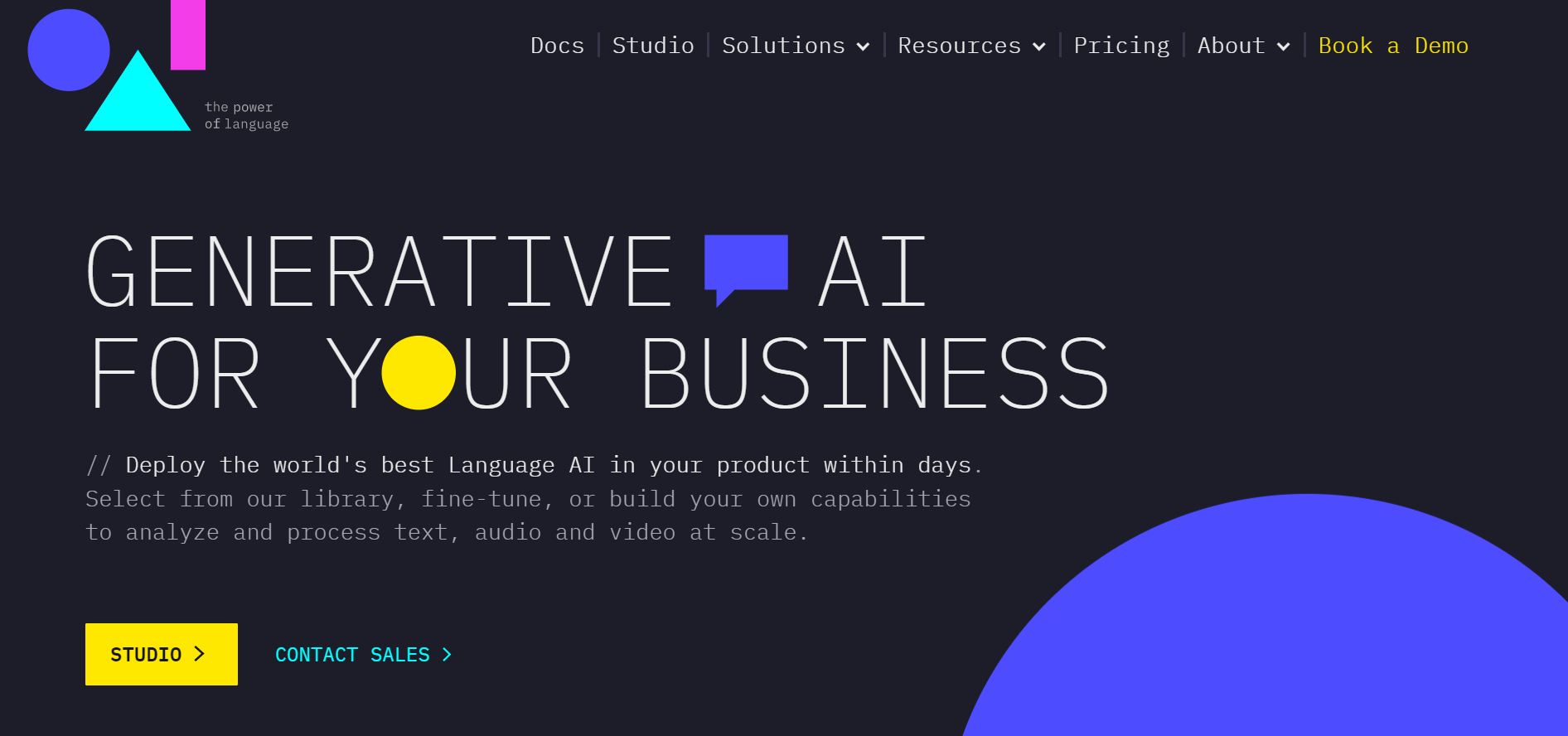
    In today’s digital age, businesses are looking for new ways to enhance their products and services to stay ahead of the competition. AI-powered language capabilities have proven to be a game-changer for businesses across industries. OneAI is one such platform that is revolutionizing the way companies integrate AI into their products.

    The platform offers a vast library of pre-built models for NLP, NLU, speech recognition, and computer vision. These models can be fine-tuned or customized to meet the specific needs of the business. With OneAI, businesses can easily integrate language capabilities into their products, regardless of their technical expertise.

    OneAI’s easy-to-use interface makes it simple for developers and business leaders to train and deploy models. With its real-time, personalized insights and recommendations, businesses can improve the customer experience and increase operational efficiency. For instance, companies can use OneAI’s language capabilities to automate customer service tasks, such as responding to customer inquiries, and provide real-time recommendations to customers.

    In conclusion, OneAI is an excellent tool for businesses looking to integrate AI-powered language capabilities into their products. Its library of pre-built models and easy-to-use interface makes it a top choice for businesses across industries.

    #AIModels #LanguageCapabilities #UpgradeYourProduct #EnhanceCustomerExperience #IncreaseOperationalEfficiency #NLP #NLU #SpeechRecognition #ComputerVision #OneAI
  • Build Computer Vision Apps in Minutes with Datature.io!

    Build Computer Vision Apps in Minutes with Datature.io!

    Computer vision is one of the most exciting and rapidly developing fields in AI today. From self-driving cars to medical imaging, computer vision is powering a range of cutting-edge applications that are transforming industries and changing the world.

    However, building computer vision applications can be a daunting task, especially for teams and enterprises that don’t have a background in AI or programming. That’s where Datature comes in.

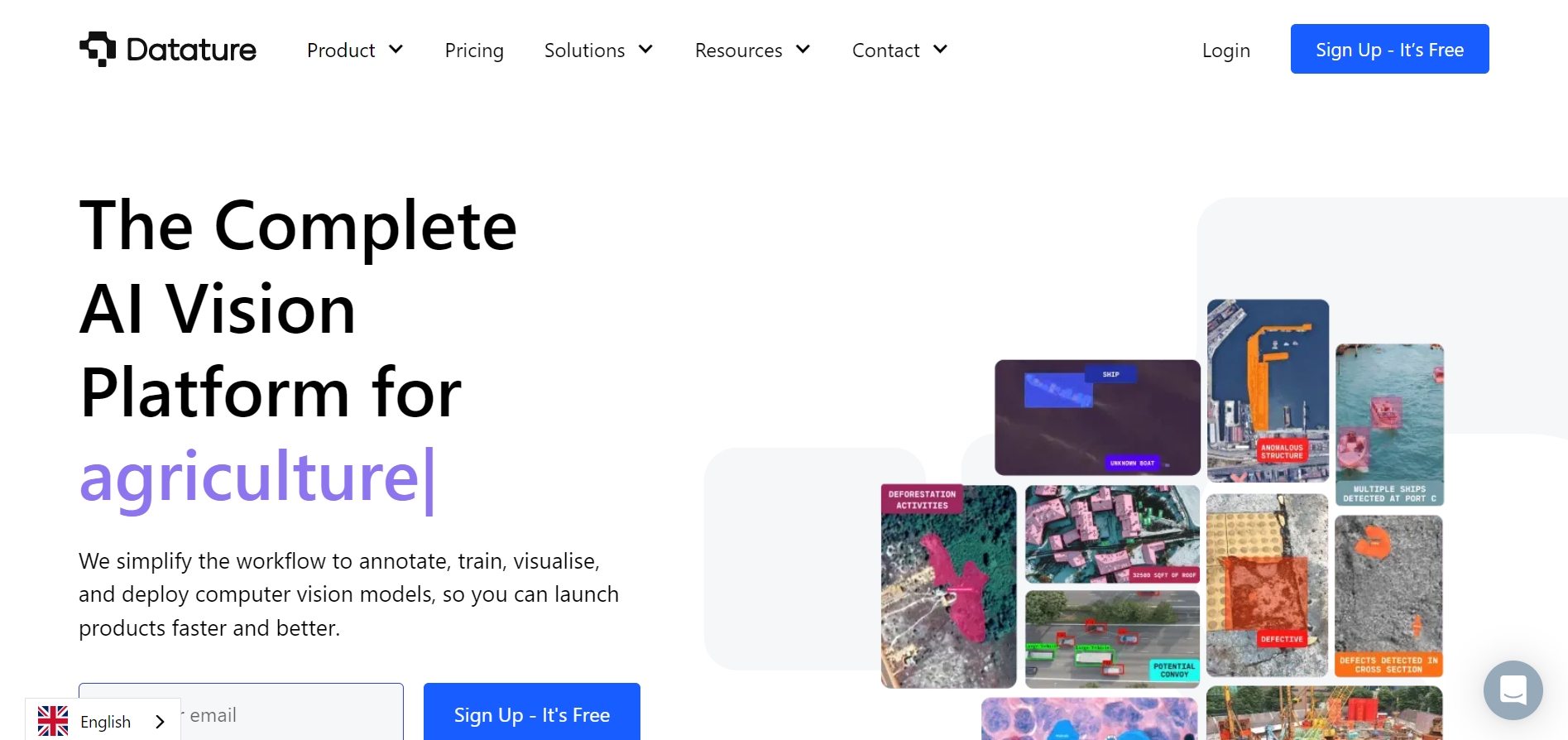
    Datature is a powerful, no-code platform that makes it easy to build computer vision applications quickly and efficiently. With Datature, users can upload their datasets, annotate images, and train their models, all without writing any code. The platform is intuitive and user-friendly, so even non-technical team members can get up and running in minutes.

    But Datature isn’t just for beginners. The platform also offers advanced features like data augmentation, data preprocessing, and data visualization, allowing users to fine-tune their models and get the most out of their data. And once your model is trained, Datature makes it easy to deploy it to the cloud, so you can start using it in your applications right away.

    In short, Datature is the fastest, easiest way for teams and enterprises to build powerful computer vision applications. Whether you’re an AI expert or a beginner, Datature has everything you need to get started and start building.

    #AIforEveryone #NoCodeAI #ComputerVisionMadeEasy #TeamProductivity #EnterpriseAI #StreamlinedAI #EfficientDataAnnotation #VisualizeYourData #PowerfulDataAugmentation

  • Fei-Fei Li: Pioneering Computer Scientist and Advocate for Diversity and Ethics in AI

    Fei-Fei Li: Pioneering Computer Scientist and Advocate for Diversity and Ethics in AI

    Fei-Fei Li is a pioneering computer scientist and artificial intelligence (AI) researcher who has made significant contributions to the field of computer vision. Her work has had a profound impact on the development of machine learning algorithms for image classification, object detection, and visual recognition. However, Fei-Fei Li’s impact extends beyond her research, as she is also a passionate advocate for diversity and ethics in AI.

    Early Life and Education

    Fei-Fei Li was born in Beijing, China in 1976. Her parents were both engineers, and Fei-Fei developed an early interest in science and technology. She went on to study physics at Peking University, but later switched to computer science. After earning her bachelor’s degree, Fei-Fei moved to the United States to pursue a PhD in electrical engineering at the California Institute of Technology (Caltech).

    Research and Contributions

    After completing her PhD, Fei-Fei Li joined the faculty at Princeton University, where she began her research in computer vision. In 2007, she co-created ImageNet, a large-scale image database that contains more than 14 million images organized into more than 20,000 categories. ImageNet has been used as a benchmark for computer vision algorithms, and has played a significant role in advancing the field of machine learning.

    Fei-Fei Li has also conducted research on integrating machine learning with neuroscience, exploring how the brain processes visual information. Her work has helped to deepen our understanding of how the brain processes images, and has led to the development of more sophisticated computer vision algorithms.

    Advocacy for Diversity and Ethics in AI

    Fei-Fei Li is a passionate advocate for diversity and ethics in the field of artificial intelligence. She has spoken widely about the need for diversity in AI, arguing that a lack of diversity can lead to biased and discriminatory algorithms. In 2017, she co-founded AI4ALL, a nonprofit organization that works to increase diversity and inclusion in the field of AI.

    In addition to her advocacy work, Fei-Fei Li has also emphasized the importance of ethical considerations in the development of AI. She has called for greater transparency in the development of algorithms, and has argued that ethical considerations should be embedded into the design process from the outset.

    Conclusion

    Fei-Fei Li is a pioneering computer scientist and AI researcher who has made significant contributions to the field of computer vision. Her work has helped to advance the development of machine learning algorithms, and has deepened our understanding of how the brain processes visual information. In addition to her research, Fei-Fei Li is a passionate advocate for diversity and ethics in AI, and has worked tirelessly to promote greater inclusion and responsible development of AI. Her work serves as an inspiration for future generations of computer scientists and AI researchers.