
Category: Google

  • Gemini: Revolutionizing AI with Ultra 1.0 – Google’s Leap into the Future

    Gemini: Revolutionizing AI with Ultra 1.0 – Google’s Leap into the Future

    Google’s recent announcement marks a pivotal shift in the world of artificial intelligence. The transformation of Bard into Gemini, coupled with the launch of Ultra 1.0 and a dedicated mobile application, showcases Google’s commitment to leading the AI revolution. Here’s a concise breakdown of this transformative update:

    • Introduction of Gemini and Ultra 1.0: Google has rebranded Bard to Gemini, introducing a mobile application and Gemini Advanced, which features access to Ultra 1.0.
    • Advanced AI Capabilities: Gemini stands as Google’s most advanced AI offering, with Ultra 1.0 being the largest and most capable model yet.
    • Superior Performance: Ultra 1.0 is noted for its exceptional conversational abilities and advanced understanding of context, outperforming competitors in complex tasks.
    • Subscription Model: Gemini Advanced, including Ultra 1.0, is part of the Google One AI Premium Plan, priced at $19.99/month after a two-month free trial.
    • Integration with Google Services: Plans are underway to integrate Gemini into Gmail, Docs, and other Google services, ensuring safety and responsible AI usage.
    • Mobile Accessibility: A new mobile experience for Gemini is now available on Android and iOS, offering versatile, multimodal assistance.

    Frequently Asked Questions (FAQs):

    1. What is Gemini?
      • Gemini is Google’s rebranded AI, previously known as Bard, featuring advanced models like Ultra 1.0 and a new mobile app for a comprehensive AI experience.
    2. How does Ultra 1.0 differ from other AI models?
      • Ultra 1.0, part of Gemini Advanced, is Google’s most capable AI model, excelling in complex tasks, conversational abilities, and context understanding.
    3. What is the cost of accessing Gemini Advanced?
      • Gemini Advanced is available under the Google One AI Premium Plan for $19.99/month, starting with a two-month free trial.
    4. Will Gemini be integrated into other Google services?
      • Yes, Google plans to integrate Gemini into Gmail, Docs, and more, focusing on safety and responsible AI practices.
    5. Is there a mobile app for Gemini?
      • Yes, a new mobile experience for Gemini is launched on both Android and iOS platforms.

    Actionable Tips for Businesses:

    • Stay Ahead: Leverage Gemini’s advanced capabilities to enhance customer service, automate tasks, and improve decision-making processes.
    • Adopt Early: Utilize the two-month free trial to explore Gemini Advanced and Ultra 1.0’s potential for your business.
    • Integration Strategy: Plan how to integrate Gemini into your current workflow, especially with upcoming Gmail and Docs integration, for seamless operations.
    • Educate Your Team: Ensure your team is familiar with Gemini’s functionalities and potential applications within your business.
    • Monitor AI Trends: Stay informed about the latest developments in AI and how they can be applied to improve your business operations and customer experiences.

    TikTok Hashtags:

    1. #GeminiAI
    2. #Ultra1Point0
    3. #GoogleAIRevolution
    4. #AIforBusiness
    5. #TechTrends2024
    6. #DigitalTransformation
    7. #InnovativeSolutions
    8. #AIIntegration
    9. #FutureOfAI
  • Exploring Google’s “Circle to Search”: Revolutionizing Android Searches with AI

    Exploring Google’s “Circle to Search”: Revolutionizing Android Searches with AI

    Google has unveiled a groundbreaking feature for Android devices called “Circle to Search,” which significantly enhances the way users interact with information on their smartphones. Here’s a deep dive into how this feature is set to revolutionize searching on Android:

    Key Highlights of Circle to Search

    • New Gesture-Based Search: Users can circle, highlight, or tap on any text, image, or video within apps to initiate a search​​.
    • AI-Enhanced Multisearch: This feature combines image and text searches, providing an AI-powered overview of the most relevant information​​.
    • Global Launch on Select Devices: Initially available on premium phones like Pixel 8, Pixel 8 Pro, and Samsung Galaxy S24 series from January 31​​.

    How Does It Work?

    Circle to Search is intuitive and seamless. Suppose you’re watching a video and want to know more about a specific item featured in it. Simply use the Circle to Search gesture on the item, and Google AI will instantly present you with relevant information, all without leaving your current app​​.

    Why Is Google Introducing This Feature?

    Google’s vision has always been to make search as natural and accessible as possible. From voice searches to Google Lens, each step has been towards making information discovery more intuitive. Circle to Search is the latest advancement in this journey, aiming to minimize disruption and maximize convenience for users​​​​.

    Enhancing Business and User Experience

    For businesses, this feature opens up new avenues for visibility and customer engagement. Products or services featured in various media can be instantly recognized and explored by potential customers, providing a more integrated and interactive shopping experience.

    FAQs

    1. Is Circle to Search available on all Android devices?
      • Initially, it’s available on select premium models like the Pixel 8 and Samsung Galaxy S24 series.
    2. Can I use Circle to Search in any app?
      • Yes, it’s designed to work across different apps on your phone.
    3. How does Circle to Search differ from Google Lens?
      • While Google Lens is more focused on visual searches, Circle to Search integrates gestures for a broader range of search capabilities.

    Tips for Maximizing Circle to Search

    • Explore Beyond the Obvious: Use it to search for not just products but also places, historical facts, or even song lyrics.
    • Business Applications: For businesses, consider how your products can be made more search-friendly for this feature.
    • Stay Informed: As the feature evolves, keep an eye on updates to leverage its full potential.

    In conclusion, Google’s Circle to Search is a significant leap in making information access more fluid and less disruptive. By integrating AI with intuitive gestures, it promises to enhance both user experience and business opportunities.


    TikTok Hashtags for Promotion

    1. #GoogleCircleToSearch
    2. #AndroidInnovation
    3. #TechTrends2024
    4. #AIRevolution
    5. #SmartSearch
    6. #GoogleAI
    7. #AndroidTips
    8. #DigitalTransformation
    9. #MobileTech
  • Transform Your Podcast into a Viral Sensation with AudioLabs – The Ultimate Growth Platform for Podcasters!

    Transform Your Podcast into a Viral Sensation with AudioLabs – The Ultimate Growth Platform for Podcasters!

    Are you a podcaster struggling to grow your audience? Do you want to take your podcast to the next level and reach more people? Look no further than AudioLabs – the revolutionary growth platform for professional podcasts using generative AI!

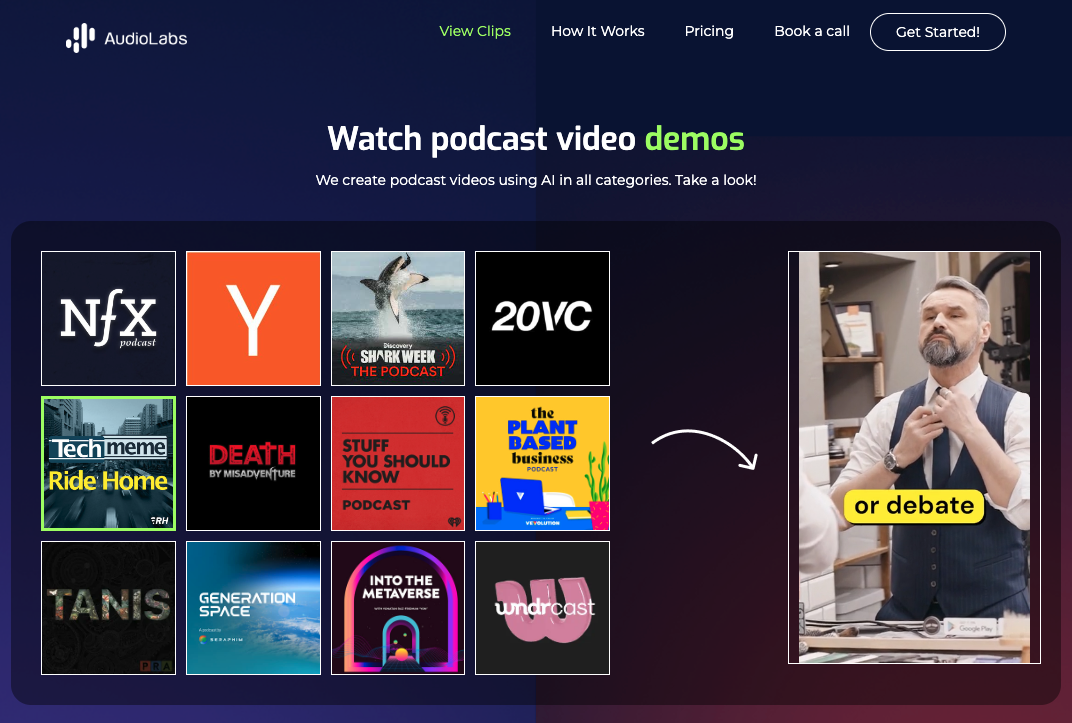
    With AudioLabs, you can now create and distribute engaging video clips from your audio content, making your podcast more accessible and shareable. The platform uses AI to detect viral hooks in your content, source visuals, and add animations and effects to the videos, ensuring that your content stands out and reaches new audiences.

    AudioLabs offers a range of packages to suit the needs of different podcasters, making it easy to get started regardless of your budget. You can import your catalog from various platforms and let AudioLabs do the rest.

    Not only is AudioLabs a powerful tool for individual podcasters, but it also partners with leading enterprises and organizations, making it an ideal platform for businesses looking to expand their reach and engagement.

    Don’t let your podcast go unnoticed any longer. Transform your audio content into a viral sensation with AudioLabs and watch your audience grow!

  • Exploring DeepMind Lab: A Revolutionary AI Research Environment

    Exploring DeepMind Lab: A Revolutionary AI Research Environment

    DeepMind Lab is an open-source, 3D virtual environment created by DeepMind, an artificial intelligence research lab owned by Alphabet Inc. The platform was developed to serve as a tool for research in artificial intelligence and machine learning. In this post, we will explore what DeepMind Lab is, how it works, and its significance in the field of AI research.

    What is DeepMind Lab?

    DeepMind Lab is a 3D virtual environment designed for AI and machine learning research. It is an open-source platform that allows researchers to test and develop intelligent agents in complex and realistic environments. The platform offers a range of challenges, from simple navigation tasks to complex spatial reasoning tasks, allowing researchers to test their models on increasingly complex tasks.

    How does DeepMind Lab work?

    DeepMind Lab works by simulating a 3D virtual environment in which researchers can develop and test their AI models. The environment is designed to be as realistic as possible, with complex physics and lighting, and detailed textures and models. This allows researchers to develop models that can interact with the environment and make decisions based on visual and spatial information.

    The platform provides a range of challenges and tasks that can be used to test AI models. These challenges include navigation tasks, object manipulation tasks, and spatial reasoning tasks. The challenges can be customized to fit the needs of the research project, and researchers can design their own custom challenges using the DeepMind Lab API.

    What is the significance of DeepMind Lab in AI research?

    DeepMind Lab is a significant platform in the field of AI research for several reasons:

    1. Realistic environments: DeepMind Lab offers a 3D virtual environment that is designed to be as realistic as possible, allowing researchers to develop models that can interact with complex and dynamic environments.
    2. Customizable challenges: The platform provides a range of challenges and tasks that can be customized to fit the needs of the research project, allowing researchers to design their own challenges and tasks.
    3. Open-source: DeepMind Lab is an open-source platform, allowing researchers to collaborate and share their research with the wider community.
    4. Innovation: The platform is constantly evolving, with new challenges and tasks being added all the time. This allows researchers to explore new areas of AI research and develop innovative solutions to complex problems.

    Conclusion

    DeepMind Lab is a revolutionary platform that has the potential to transform the field of AI research. By providing a realistic 3D virtual environment, customizable challenges, and an open-source API, the platform allows researchers to develop and test intelligent agents in complex and dynamic environments. As the platform continues to evolve, we can expect to see new innovations and breakthroughs in the field of AI and machine learning.

  • Ray Kurzweil: The Pioneer of Artificial Intelligence

    Ray Kurzweil: The Pioneer of Artificial Intelligence

    Ray Kurzweil is a well-known futurist and computer scientist who has dedicated his life to advancing the field of artificial intelligence (AI). Over the years, he has made significant contributions to the development of AI, and his work has had a profound impact on the field. In this blog post, we will take a closer look at Ray Kurzweil and what he has done for AI.

    Early Career and Inventions

    Ray Kurzweil began his career as an inventor in the 1970s. He is credited with inventing the first optical character recognition system, which enabled computers to read printed text. He also developed the first electronic keyboard capable of replicating the sound of a grand piano.

    In the 1980s, Kurzweil turned his attention to speech recognition technology. He developed a speech recognition system that was capable of understanding natural language and could even recognize multiple speakers. This technology was a significant advancement in the field of AI and is still used today.

    Contribution to AI

    One of Kurzweil’s most significant contributions to AI is his concept of the singularity. The singularity is a point in the future when AI will become more intelligent than humans. Kurzweil believes that this will happen by the year 2045, and he has written extensively about what this could mean for humanity.

    Kurzweil has also been a strong advocate for the development of strong AI, or AGI, which is AI that is capable of human-like intelligence. He believes that AGI will revolutionize many industries, from healthcare to finance, and will have a significant impact on society.

    In addition to his advocacy work, Kurzweil has also made significant contributions to the development of AI technologies. He founded Kurzweil Applied Intelligence, which was later acquired by Google, and he currently serves as a director of engineering at Google.

    Kurzweil has also authored several books on AI, including “The Age of Intelligent Machines,” “The Singularity Is Near,” and “How to Create a Mind.” These books have been influential in shaping the conversation around AI and its potential impact on humanity.

    Conclusion

    Ray Kurzweil has been a driving force in the development of AI for over four decades. His contributions to the field have been instrumental in advancing the technology and shaping the conversation around its potential impact. As we move closer to the singularity, Kurzweil’s work will undoubtedly continue to be influential in shaping the future of AI and its impact on society.

  • Mastering Your YouTube Thumbnail Game: Tips and Tricks for Optimal Views

    Mastering Your YouTube Thumbnail Game: Tips and Tricks for Optimal Views

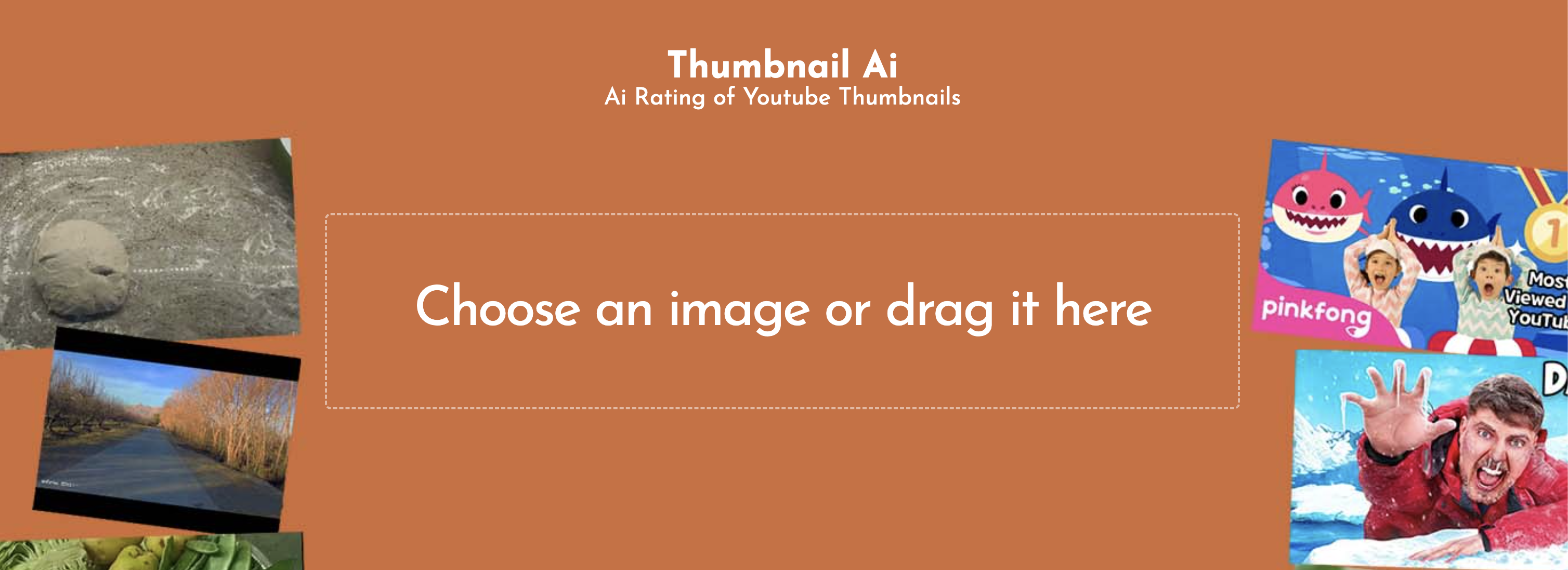
    YouTube thumbnail optimization can be a challenging task, but with the right approach and the help of AI tools such as Thumbnail-AI, it can be made easier. By using an AI rating system, Thumbnail-AI can analyze your thumbnail and provide suggestions for improving it. Suggestions can include adding text, brightening colors, and optimizing image size, among others.

    Creating an eye-catching thumbnail is important for making a good first impression on viewers. A visually appealing thumbnail with a clear and concise message can help to capture the attention of potential viewers, and entice them to click on your video. In addition, it’s important to make sure your thumbnail aligns with the content of your video, and delivers on the promise made in the title and description.

    Professional presentation is also key to making your video stand out. By using high-quality images, fonts, and designs, your thumbnail can convey a sense of professionalism and expertise, making it more likely to be clicked on by viewers.

    For content creators and YouTubers, social media marketing is an important tool for promoting their channels and increasing visibility. An engaging thumbnail can be shared on social media platforms to promote your video, generating interest and clicks from potential viewers.

    Overall, optimizing your YouTube thumbnail game can have a significant impact on the success of your channel. By using tools like Thumbnail-AI and following the tips and tricks outlined in this post, you can create engaging and professional thumbnails that will maximize your views and help you stand out in the crowded YouTube space.

  • Google Search Meets Its Demise: The Shocking Day That Will Go Down in History – 7/2/23!

    Google Search Meets Its Demise: The Shocking Day That Will Go Down in History – 7/2/23!

    Google Launches AI-Powered Chatbot Bard to Compete with ChatGPT

    Google is entering the AI chatbot market with the launch of Bard, a chatbot that will rival the popular ChatGPT. Bard will be tested by a group of users before its public release in the coming weeks, and it is built on Google’s existing language model, Lamda. One engineer has even described Lamda as being so human-like in its responses that he believed it was sentient.

    In addition to launching Bard, Google is also introducing new AI tools for its search engine. AI chatbots are designed to answer questions and find information, using the internet as a vast database of knowledge. However, there are concerns that this may also include offensive material and disinformation.

    In a blog post, Google CEO Sundar Pichai emphasized his desire for the company’s AI services to be “bold and responsible”, but did not elaborate on how Bard would prevent the sharing of harmful content. The chatbot will initially operate on a lightweight version of Lamda, which requires less power and can be used by more people at once.

    Google’s announcement follows wide speculation that Microsoft is bringing ChatGPT to its search engine Bing. ChatGPT can answer questions and carry out requests in text form, using information from the internet as of 2021. It can generate speeches, songs, marketing copy, news articles, and student essays. Currently, ChatGPT is free for people to use, but OpenAI recently announced a subscription tier to complement free access.

    The ultimate goal of chatbots is believed to be replacing web links with a definitive answer in internet searches. Pichai noted that people are asking more nuanced questions in Google search, and AI can synthesize insights for questions with no one right answer. He wrote that soon, AI-powered features in search will distill complex information and multiple perspectives into easily digestible formats.

    In conclusion, with the launch of Bard, Google is entering a competitive AI chatbot market. The chatbot will initially operate on a lightweight version of Lamda and will be tested by a group of users before its public release. Pichai emphasized his desire for Google’s AI services to be “bold and responsible”. The ultimate goal of chatbots is believed to be replacing web links with a definitive answer in internet searches, and Google is working towards this goal by distilling complex information into easily digestible formats.

  • Unlocking the Secrets of Music: How Google’s SEANET and MusicLM are Changing the Game

    Unlocking the Secrets of Music: How Google’s SEANET and MusicLM are Changing the Game

    Music is a universal language that has the power to bring people together and evoke a wide range of emotions. However, understanding the language of music and the creative process behind it can be a complex and mysterious endeavor. Fortunately, advancements in artificial intelligence and machine learning have made it possible to unlock the secrets of music and gain new insights into how it is created and understood.

    Google has recently introduced SEANET and MusicLM, two powerful tools that allow researchers and music enthusiasts to explore the musical language in new and exciting ways. SEANET, short for “Structured Event Network”, is a neural network that is able to analyze the structure and harmony of music. MusicLM, on the other hand, is a language model that is trained on a dataset of thousands of songs and can generate new music that is similar to existing songs.

    One of the most exciting features of SEANET is its ability to analyze the structure and harmony of music in real-time. This allows researchers to study how different sections of a song are related to one another and how the harmonic progression evolves over time. Additionally, SEANET can be used to study the relationship between different sections of a song and how they are related to one another.

    MusicLM is a powerful tool that allows researchers to generate new music that is similar to existing songs. The model is trained on a dataset of thousands of songs and can generate new songs that are similar in style, structure, and harmony. By adjusting the parameters of the model, researchers can fine-tune the generated songs to match the style and structure of a specific song or genre.

    One of the most exciting applications of MusicLM is its ability to generate new songs that are similar to existing songs. This can be used to create new music for films, video games, and other media. Additionally, MusicLM can be used to generate new music for live performances, allowing musicians to experiment with new sounds and styles in real-time.

    Overall, SEANET and MusicLM are powerful tools that allow researchers and music enthusiasts to explore the musical language in new and exciting ways. By unlocking the secrets of music, these tools can help us gain new insights into how music is created and understood, and ultimately, how it can bring people together.

  • Google’s Investment in Anthropic: Heating up the Competition with ChatGPT

    Google’s Investment in Anthropic: Heating up the Competition with ChatGPT

    As the race to lead the Artificial Intelligence industry intensifies, Google has made a significant investment in Anthropic, a company operating in the AI space. Google’s investment of $300 million in Anthropic highlights the growing importance of AI and the increased competition among technology companies to develop advanced AI systems.

    This investment is seen as a move by Google to keep up with its competitors, including OpenAI, which developed ChatGPT, one of the most advanced language models in existence. ChatGPT has set a high standard in the AI industry and has become a benchmark for other companies to follow.

    Google’s investment in Anthropic is a sign of the company’s commitment to advancing AI technology and staying ahead of the competition. This investment is expected to result in the development of more advanced AI systems, which will bring about significant changes in various industries.

    In conclusion, Google’s investment in Anthropic is a bold move that demonstrates the company’s determination to lead the AI industry. As AI continues to be one of the most rapidly developing technology fields, this investment is likely to bring about exciting advancements and increased competition in the near future.

  • The End of Google Search?

    The End of Google Search?

    Google, known for its search engine, is reportedly concerned about the impact of OpenAI’s ChatGPT, a Q&A machine that uses natural language to respond to questions. ChatGPT’s user-friendly interface and fluid prose has led to speculation that it may end Google’s dominance in search. In response, Google has declared a “code red” and is focusing on AI with plans to release 20 AI-powered products this year, including a ChatGPT-like search bot. However, questions remain about the technology’s readiness for widespread use and whether it can be trusted for accurate information.

    Google is one of the biggest companies on Earth. Google’s search engine is the front door to the internet. And according to recent reports, Google is scrambling. Late last year, OpenAI, an artificial intelligence company at the forefront of the field, released ChatGPT. Alongside Elon Musk’s Twitter acquisition and fallout from FTX’s crypto implosion, breathless chatter about ChatGPT and generative AI has been ubiquitous. The chatbot, which was born from an upgrade to OpenAI’s GPT-3 algorithm, is like a futuristic Q&A machine. Ask any question, and it responds in plain language. Sometimes it gets the facts straight. Sometimes not so much. Still, ChatGPT took the world by storm thanks to the fluidity of its prose, its simple interface, and a mainstream launch.

    When a new technology hits public consciousness, people try to sort out its impact. Between debates about how bots like ChatGPT will impact everything from academics to journalism, not a few folks have suggested ChatGPT may end Google’s reign in search. Who wants to hunt down information fragmented across a list of web pages when you could get a coherent, seemingly authoritative, answer in an instant?

    In December, The New York Times reported Google was taking the prospect seriously, with management declaring a “code red” internally. This week, as Google announced layoffs, CEO Sundar Pichai told employees the company will sharpen its focus on AI. The NYT also reported Google founders, Larry Page and Sergey Brin, are now involved in efforts to streamline development of AI products. The worry is that they’ve lost a step to the competition.

    If true, it isn’t due to a lack of ability or vision. Google’s no slouch at AI. The technology here—a flavor of deep learning model called a transformer—was developed at Google in 2017. The company already has its own versions of all the flashy generative AI models, from images (Imagen) to text (LaMDA). Indeed, in 2021, Google researchers published a paper pondering how large language models (like ChatGPT) might radically upend search in the future. “What if we got rid of the notion of the index altogether and replaced it with a pre-trained model that efficiently and effectively encodes all of the information contained in the corpus?” Donald Metzler, a Google researcher, and coauthors wrote at the time. “What if the distinction between retrieval and ranking went away and instead there was a single response generation phase?” This should sound familiar.

    Whereas smaller organizations opened access to their algorithms more aggressively, however, Google largely kept its work under wraps. Offering only small, tightly controlled demos to limited groups of people, it deemed the tech too risky and error-prone for wider release just yet. Damage to its brand and reputation was a chief concern.

    Chat GPT Chat with AI Artificial Intelligence. Businessman using chatbot in computer smart intelligence Ai, artificial intelligence developed by OpenAI. Futuristic technology, robot in online system.

    Now, sweating it out under the bright lights of ChatGPT, the company is planning to release some 20 AI-powered products later thisyear, according to the NYT. These will encompass all the top generative AI applications, like image, text, and code generation—and they’ll test a ChatGPT-like bot in search. But is the technology ready to go from splashy demo tested by millions to a crucial tool trusted by billions? In their 2021 paper, the Google researchers suggested an ideal chatbot search assistant would be authoritative, transparent, unbiased, accessible, and contain diverse perspectives. Acing each of those categories is still a stretch for even the most advanced large language models. Trust matters with search in particular. When it serves up a list of web pages today, Google can blame content creators for poor quality and vow to serve better results in the future. With an AI chatbot, it is the content creator, and if ChatGPT can’t get its facts straight, it may not be able to gain the trust of users, ultimately leading to its failure.