Category: People of Ai

  • Mind-Blowing! AI-Generated Images So Realistic, You Won’t Believe They’re Not Photographs

    Mind-Blowing! AI-Generated Images So Realistic, You Won’t Believe They’re Not Photographs

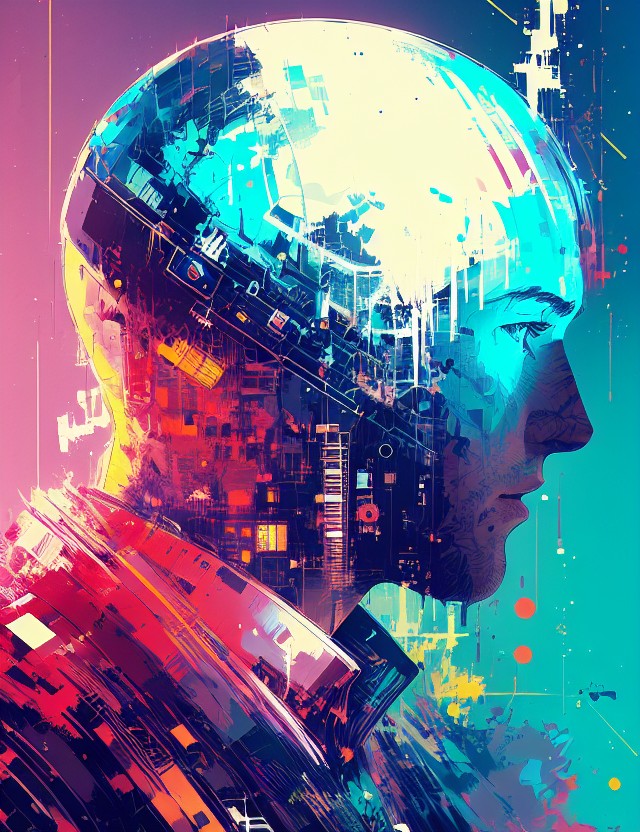
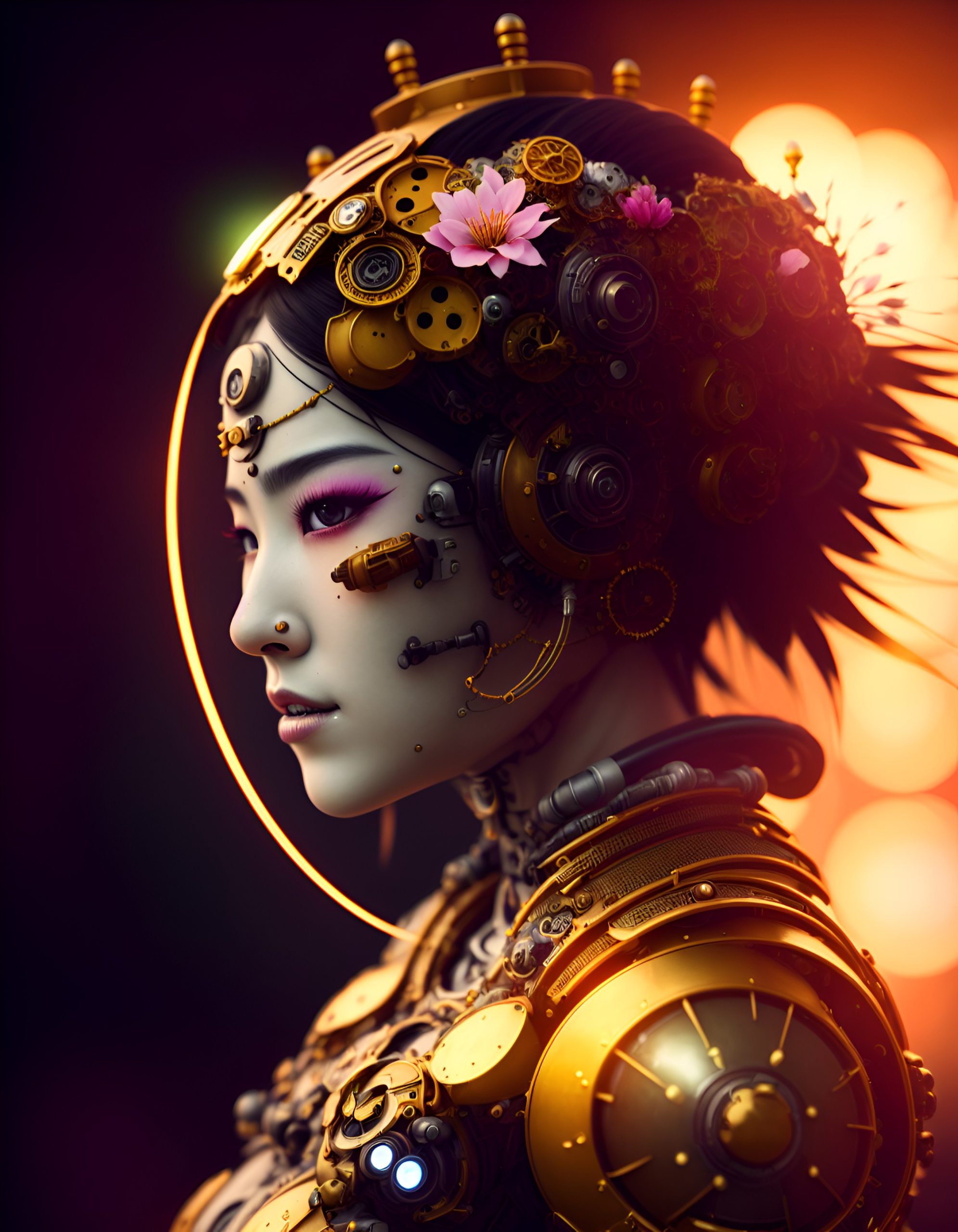
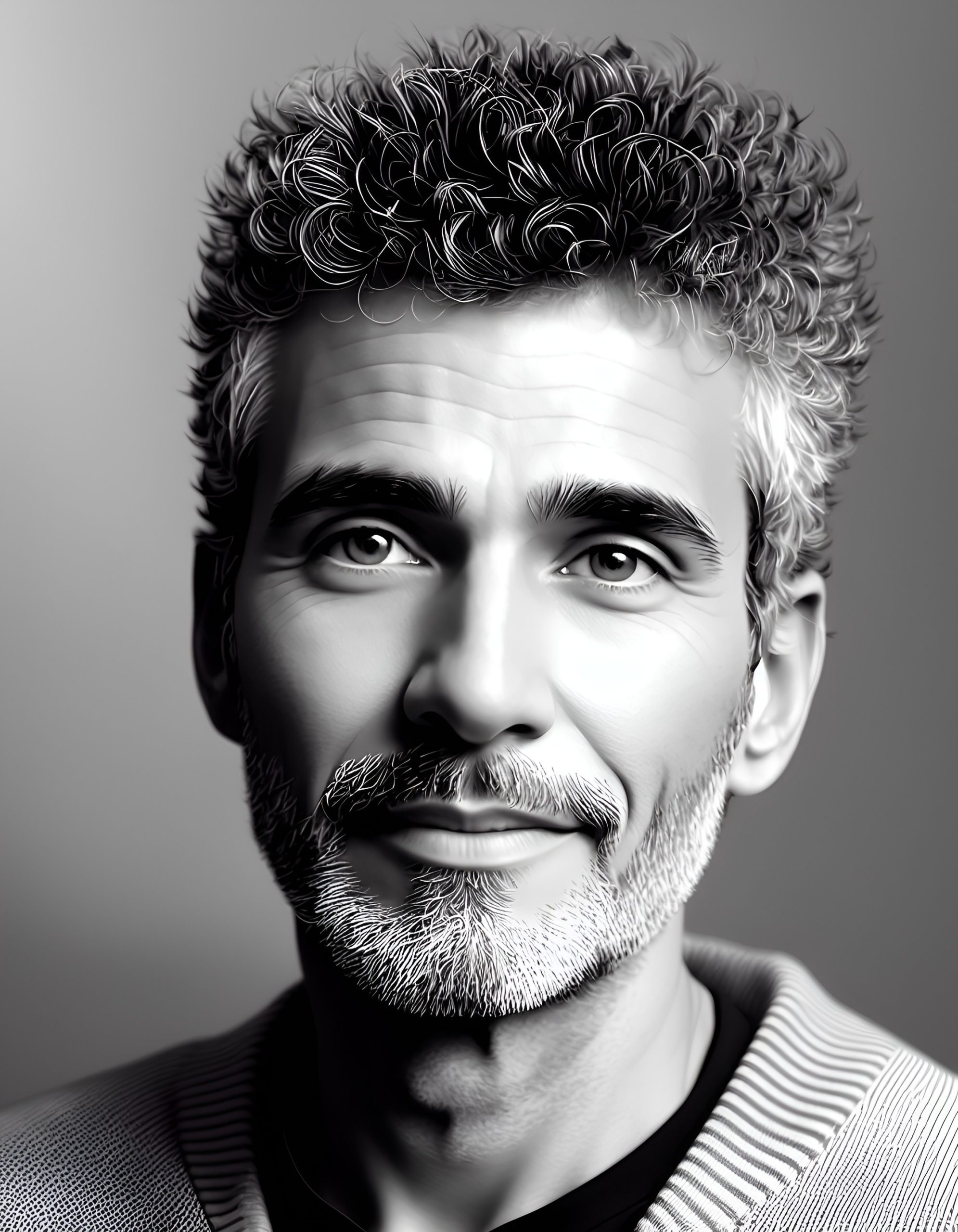
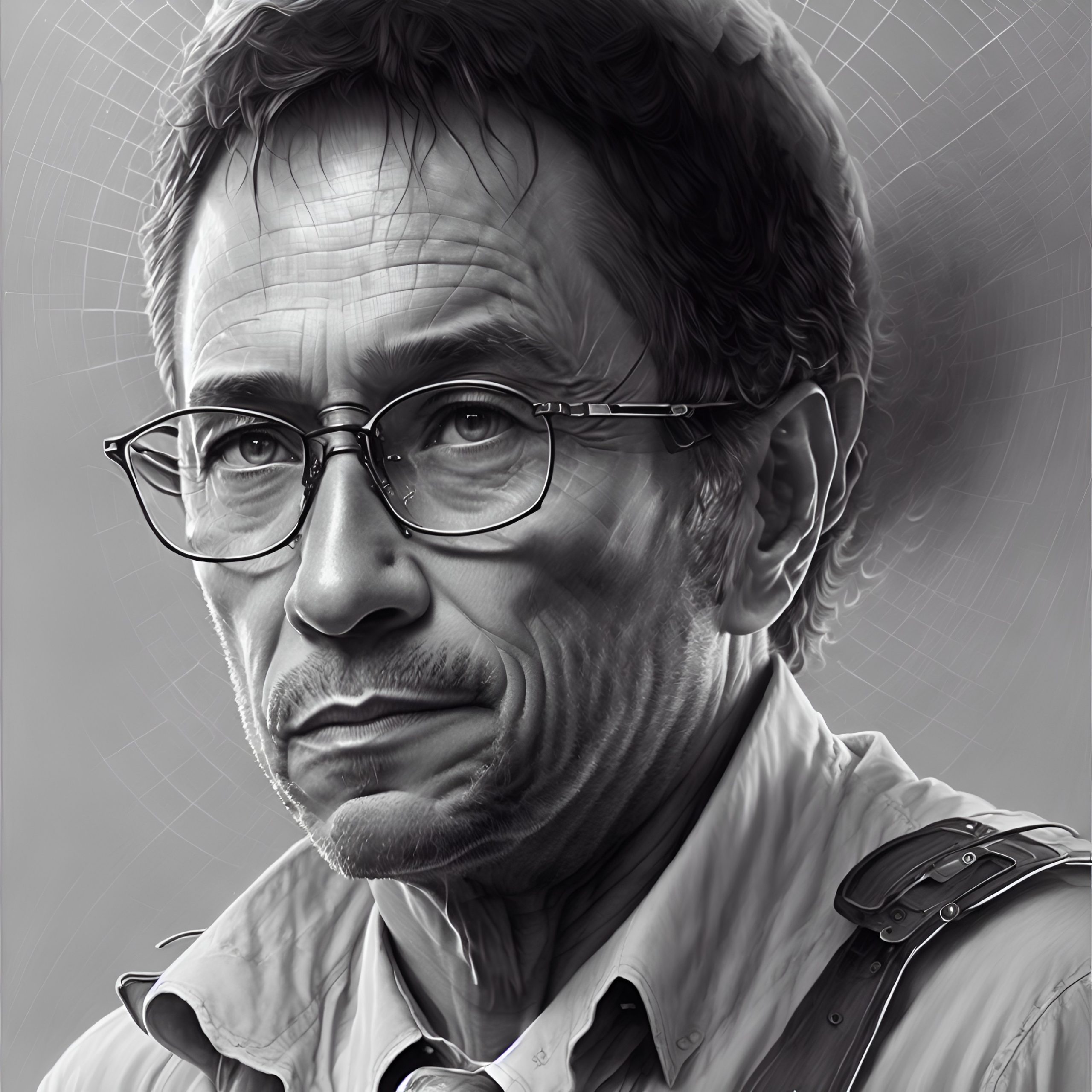
    @makeitrad1 has gained a significant following on social media, with people being amazed by the level of detail and realism in the artworks generated by this AI artist. Using cutting-edge technology and advanced algorithms, @makeitrad1 has been able to create images that are almost indistinguishable from photographs. From landscapes to portraits, the range of @makeitrad1’s artwork is truly impressive.

    But what sets @makeitrad1 apart from other AI artists is the level of creativity and emotion that is evident in the artworks. While many AI-generated images can appear cold and mechanical, the artworks created by @makeitrad1 are filled with emotion and a sense of storytelling. This is a testament to the skills of the artists who programmed the algorithm, as well as the power of the AI itself.

    The use of AI in art has been controversial, with some arguing that it undermines the role of human artists and devalues the creative process. However, @makeitrad1 and other AI artists have proven that this is not the case. Instead, AI artists offer a new form of creative expression that complements and enhances the work of human artists.

    Moreover, the work of @makeitrad1 and other AI artists has practical applications. AI-generated images can be used in advertising, film, and video games, allowing for more realistic and immersive experiences for viewers and players.

    In conclusion, @makeitrad1 is a shining example of the incredible potential of AI in art. By combining cutting-edge technology with creative programming, @makeitrad1 has become a leading figure in the world of AI-generated art. As the use of AI in art continues to grow, we can expect to see more incredible works of art that push the boundaries of what is possible.

    http://discord.gg/AZWswEk7Mz
    solo.to/makeitrad

    Preview in new tab

  • Ilya Sutskever: The AI Genius behind Deep Learning Breakthroughs

    Ilya Sutskever: The AI Genius behind Deep Learning Breakthroughs

    The field of artificial intelligence (AI) has seen incredible advancements over the past decade, and much of it can be attributed to the pioneering work of Ilya Sutskever. Sutskever is a machine learning expert and a co-founder of OpenAI, a research company dedicated to advancing AI for the betterment of humanity. His contributions to the field have been nothing short of revolutionary, and his work has laid the foundation for many of the AI breakthroughs we see today.

    Early Life and Education

    Ilya Sutskever was born in Russia in 1984 and later moved to Canada with his family. He attended the University of Toronto, where he obtained his bachelor’s degree in computer science. He went on to pursue a Ph.D. in machine learning at the University of Montreal, where he worked under the guidance of renowned AI researcher Yoshua Bengio.

    Contributions to AI

    Sutskever’s research has been instrumental in the development of deep learning, a subfield of machine learning that has been responsible for many of the recent advances in AI. In 2011, Sutskever co-authored a paper on deep learning that laid the foundation for many of the techniques used in the field today. The paper introduced the concept of deep neural networks, which are artificial neural networks with multiple layers. These networks can learn to recognize complex patterns in data, such as images, speech, and text.

    One of Sutskever’s most notable contributions to AI is his work on neural machine translation. In 2014, he co-authored a paper that introduced a new approach to machine translation using deep neural networks. The approach, known as sequence to sequence (seq2seq) modeling, revolutionized machine translation by allowing systems to translate whole sentences at once, rather than just individual words. This breakthrough led to significant improvements in the quality of machine translations, and it is now widely used in many translation systems.

    Sutskever has also made significant contributions to the field of reinforcement learning, a branch of AI concerned with teaching machines how to make decisions based on trial and error. In 2015, he co-authored a paper on deep reinforcement learning that introduced a technique known as asynchronous methods for deep reinforcement learning. This technique allowed multiple agents to learn from the same experience, which significantly accelerated the learning process.

    OpenAI

    In 2015, Sutskever co-founded OpenAI, a research company dedicated to advancing AI in a safe and beneficial way. The company’s goal is to ensure that AI technology benefits humanity as a whole, rather than just a select few. OpenAI’s research spans a wide range of areas, from natural language processing and robotics to healthcare and education.

    Through OpenAI, Sutskever has continued to make significant contributions to the field of AI. In 2016, he co-authored a paper on generative adversarial networks (GANs), a type of neural network that can generate new data by learning the underlying patterns in a dataset. This breakthrough has led to many exciting applications, including the generation of realistic images and videos.

    Conclusion

    Ilya Sutskever’s contributions to the field of AI have been nothing short of groundbreaking. His research has laid the foundation for many of the recent breakthroughs in deep learning and has led to significant improvements in machine translation, reinforcement learning, and generative modeling. Through his work at OpenAI, Sutskever continues to push the boundaries of AI research, and his contributions will undoubtedly shape the field for years to come.


  • Tom Mitchell: The Pioneer of Machine Learning

    Tom Mitchell: The Pioneer of Machine Learning

    Machine learning is one of the most revolutionary technologies of our time. It has transformed the way we work, communicate, and interact with our surroundings. But have you ever wondered who paved the way for this incredible technology? Meet Tom Mitchell, the pioneer of machine learning, who has played a significant role in shaping the future of this field.

    Tom Mitchell is an American computer scientist, professor, and researcher. He is best known for his contribution to machine learning, which has earned him numerous accolades, including the prestigious ACM-AAAI Allen Newell Award in 2000. Born in 1951 in Washington, D.C., Tom Mitchell received his Bachelor’s degree in Electrical Engineering from the Massachusetts Institute of Technology (MIT) in 1973. He later obtained his Ph.D. in computer science from Stanford University in 1982.

    Mitchell’s early work focused on the field of natural language processing (NLP), where he developed an algorithm that could understand the context of a sentence based on the relationships between its words. This algorithm was groundbreaking because it demonstrated that computers could process and understand human language, which was previously thought to be impossible.

    In the late 1980s, Mitchell shifted his focus to the field of machine learning, which was then in its infancy. He was one of the first researchers to recognize the potential of machine learning and its applications in various fields, including speech recognition, computer vision, and robotics. He established the Machine Learning Department at Carnegie Mellon University in 2006, which is now one of the leading centers for research in machine learning.

    One of Mitchell’s most significant contributions to the field of machine learning was his development of the concept of “Instance-Based Learning.” This concept involves using previous examples to make predictions about new data. For instance, if a computer is trained on a set of images of dogs and cats, it can use this knowledge to identify new images of dogs and cats that it has never seen before.

    Mitchell also played a pivotal role in the development of machine learning algorithms that could improve over time. These algorithms, known as “Reinforcement Learning,” are now used in a variety of applications, including game development, robotics, and autonomous vehicles. Reinforcement Learning is based on the idea that an agent can learn to make decisions based on rewards or punishments that it receives for its actions.

    Today, Mitchell continues to be an influential figure in the field of machine learning. He is a professor at Carnegie Mellon University and the author of several books and publications on machine learning, natural language processing, and artificial intelligence. His research focuses on developing algorithms that can learn from large amounts of data and use that knowledge to make predictions and decisions.

    In conclusion, Tom Mitchell is a true pioneer in the field of machine learning. His contributions to the development of algorithms that can process natural language and learn from data have paved the way for modern-day machine learning applications. His work has not only influenced the field of computer science but also has had a profound impact on many other industries. It is safe to say that Tom Mitchell’s legacy will continue to inspire future generations of machine learning researchers and practitioners for many years to come.

  • The Rise of Joanna Bryson: A Maverick in the AI World

    The Rise of Joanna Bryson: A Maverick in the AI World

    Joanna Bryson is a name that has become synonymous with the rapidly growing field of artificial intelligence (AI). She is a maverick in the industry, having made significant contributions to the development of AI while also being a vocal advocate for ethical and responsible AI. Her expertise in the field has earned her numerous accolades, including being named one of the top 100 most influential people in AI ethics.

    Bryson’s journey into the world of AI began when she was a young student at the University of Chicago, where she studied philosophy and psychology. It was during this time that she developed an interest in the study of cognition, which eventually led her to pursue a PhD in Artificial Intelligence from the Massachusetts Institute of Technology (MIT).

    After completing her PhD, Bryson began her career as a researcher at MIT, where she worked on several groundbreaking projects in the field of AI. One of her most notable contributions was the development of an intelligent agent, which was capable of learning from its environment and making decisions based on that learning.

    Bryson’s work in AI soon caught the attention of industry leaders, and she was recruited to work at several prominent tech companies, including Hewlett-Packard and IBM. During her time at these companies, Bryson continued to push the boundaries of AI research, developing new algorithms and techniques that helped to improve the performance of AI systems.

    Despite her success in the industry, Bryson remained committed to ethical and responsible AI, and she became a vocal advocate for the development of AI systems that are transparent and accountable. She has also been a strong proponent of diversity in the field of AI, advocating for the inclusion of more women and people of color in the industry.

    Bryson’s advocacy work has earned her a reputation as one of the leading voices in the AI ethics community. She has written extensively on the subject, publishing numerous papers and articles on topics such as bias in AI and the ethical implications of autonomous systems. She has also been a frequent speaker at conferences and events, where she has shared her insights and expertise with others in the industry.

    Today, Bryson continues to be a prominent figure in the world of AI, working as a professor of computer science at the University of Bath in the United Kingdom. She remains committed to the development of AI systems that are transparent, accountable, and ethical, and her work continues to inspire others in the field to follow in her footsteps.

    In conclusion, Joanna Bryson is a true maverick in the world of artificial intelligence. Her groundbreaking research, advocacy work, and commitment to ethical and responsible AI have earned her a well-deserved reputation as one of the leading voices in the industry. As AI continues to grow and evolve, Bryson’s insights and expertise will undoubtedly continue to shape the field for years to come.
  • Yoky Matsuoka: A Pioneer in Robotics and Human Augmentation

    Yoky Matsuoka: A Pioneer in Robotics and Human Augmentation

    Yoky Matsuoka is a renowned roboticist, neuroscientist, and entrepreneur who has made significant contributions to the field of robotics and human augmentation. She has dedicated her career to developing cutting-edge technologies that improve people’s lives by enhancing their physical capabilities.

    Matsuoka was born in Tokyo, Japan, in 1967. She grew up with a passion for sports, particularly tennis and basketball, and dreamed of becoming a professional athlete. However, a serious injury prevented her from pursuing her athletic goals. Instead, she turned her attention to science and technology, earning a bachelor’s degree in mechanical engineering from Kyoto University in 1988.

    After completing her undergraduate studies, Matsuoka moved to the United States to pursue a Ph.D. in robotics at the Massachusetts Institute of Technology (MIT). At MIT, she focused on developing robotic prostheses that could be controlled by signals from the user’s nervous system. Her groundbreaking research earned her a Ph.D. in Electrical Engineering and Computer Science from MIT in 1995.

    After completing her Ph.D., Matsuoka continued her research on robotic prostheses and human augmentation at the University of Washington in Seattle. There, she developed a robotic hand that could mimic the movements of a human hand, allowing people with disabilities to perform complex tasks such as grasping and manipulating objects.

    In 2007, Matsuoka joined Google to lead their robotics division, where she worked on developing robots that could perform tasks in environments that were dangerous or difficult for humans, such as disaster zones or space exploration. She also served as a Vice President at Nest, a company that specializes in smart home technology, and as the Chief Technology Officer at Quanttus, a startup that developed wearable health monitoring devices.

    Matsuoka’s work has earned her numerous awards and accolades, including the MacArthur Fellowship in 2007, which is often referred to as the “genius grant.” In addition to her research, Matsuoka is also a strong advocate for diversity in science and technology, and has spoken out about the importance of promoting gender and racial equality in STEM fields.

    Today, Matsuoka is the CEO and Co-Founder of Amperity, a customer data platform that helps companies better understand and engage with their customers. While her current work is not directly related to robotics or human augmentation, her innovative spirit and commitment to improving people’s lives through technology continue to inspire others in the field.

    In conclusion, Yoky Matsuoka is a trailblazer in the field of robotics and human augmentation, whose research has paved the way for new innovations and technologies that have the potential to transform people’s lives. Her dedication to diversity and inclusion in STEM fields serves as an inspiration to the next generation of scientists and technologists.

  • Demis Hassabis: The Visionary Leader Pushing the Boundaries of AI

    Demis Hassabis: The Visionary Leader Pushing the Boundaries of AI

    Demis Hassabis is a renowned entrepreneur, computer scientist, and artificial intelligence (AI) researcher. Born on July 27, 1976, in London, Hassabis developed a keen interest in technology and computer science from an early age. His passion for AI led him to co-found DeepMind, a UK-based AI company that Google acquired in 2015.

    Hassabis began his academic journey by attending Christ’s College at the University of Cambridge, where he received a Bachelor of Arts degree in Computer Science. He then pursued a PhD in Cognitive Neuroscience at University College London, where he worked on understanding the neural basis of memory.

    After completing his PhD, Hassabis continued to explore the intersection between AI and neuroscience, with a particular focus on building machines that can learn and reason like humans. In 2010, he co-founded DeepMind with Mustafa Suleyman and Shane Legg, with the goal of creating AI systems that can solve complex problems and make meaningful contributions to society.

    Under Hassabis’s leadership, DeepMind has achieved numerous breakthroughs in the field of AI, including developing AlphaGo, an AI system that defeated the world champion in the board game Go. AlphaGo’s victory marked a major milestone in the development of AI, as Go was widely considered to be one of the most complex games ever devised.

    Beyond his work with DeepMind, Hassabis is also a respected figure in the broader AI community. He has published numerous papers on AI and neuroscience, and has served on the editorial boards of several academic journals. He is also a Fellow of the Royal Society, the world’s oldest scientific academy in continuous existence.

    Hassabis’s work has garnered widespread recognition and numerous awards, including the Royal Society Mullard Award, the Royal Society Wolfson Research Merit Award, and the IEEE Neural Network Pioneer Award. He has also been named to the Time 100, a list of the world’s most influential people, and was awarded a CBE in the 2018 New Year Honours for his services to science and technology.

    In addition to his scientific achievements, Hassabis is also known for his entrepreneurial spirit and his commitment to making AI accessible to everyone. He has spoken about the need for AI to be used in a responsible and ethical manner, and has emphasized the importance of working towards a future where AI is used to benefit society as a whole.

    In conclusion, Demis Hassabis is a visionary leader in the field of AI, whose work has pushed the boundaries of what is possible with this revolutionary technology. His achievements have earned him widespread recognition and respect, and his continued commitment to responsible AI development promises to shape the future of the field for years to come.
  • Yoshua Bengio: Pioneering the Future of AI with Deep Learning and Ethics

    Yoshua Bengio: Pioneering the Future of AI with Deep Learning and Ethics

    Yoshua Bengio is a renowned computer scientist and artificial intelligence (AI) expert, widely recognized as one of the pioneers of deep learning. He is a professor at the University of Montreal and the founder and scientific director of Mila, Quebec’s AI institute.

    Born in Paris, France in 1964, Bengio grew up in Montreal, Canada. He received his undergraduate degree in computer science and mathematics from McGill University in 1985, and his PhD in computer science from the Université de Montréal in 1991.

    Bengio’s research interests are focused on machine learning, natural language processing, and deep learning. He is best known for his work on deep learning, which is a subfield of machine learning that focuses on the development of artificial neural networks capable of processing large amounts of data.

    One of Bengio’s most significant contributions to the field of deep learning is his work on “word embeddings.” Word embeddings are a way of representing words in a high-dimensional space, where each dimension represents a different feature of the word. This technique has been used to improve the accuracy of natural language processing tasks, such as language translation and sentiment analysis.

    Bengio has also made significant contributions to the development of “neural machine translation,” which is a type of machine translation that uses neural networks to translate text from one language to another. This technique has significantly improved the accuracy of machine translation, making it more useful in a variety of applications.

    In addition to his research, Bengio is also a committed advocate for ethical and responsible AI. He has co-founded the International Conference on Learning Representations (ICLR), which is committed to promoting open research and promoting the development of ethical and socially responsible AI.

    Bengio has received numerous awards and honors for his contributions to the field of AI, including the Turing Award, which is often referred to as the “Nobel Prize of Computing.” He has also been named an Officer of the Order of Canada and a Fellow of the Royal Society of Canada.

    In conclusion, Yoshua Bengio is a world-renowned computer scientist and AI expert who has made significant contributions to the field of deep learning and natural language processing. His research has improved the accuracy and effectiveness of AI in a variety of applications, and his commitment to ethical and responsible AI has made him a leader in the field.

  • Exploring the Frontiers of Artificial Intelligence and Robotics: Insights from Pieter Abbeel’s Research

    Exploring the Frontiers of Artificial Intelligence and Robotics: Insights from Pieter Abbeel’s Research

    Pieter Abbeel is a well-known researcher in the field of artificial intelligence (AI) and robotics. He is currently a professor at the University of California, Berkeley, where he leads the Berkeley Robot Learning Lab. Abbeel has made significant contributions to the field of AI and robotics, particularly in the areas of deep reinforcement learning and imitation learning.

    Abbeel’s research has focused on developing algorithms and methods for robots to learn from their environment and from human demonstrations, enabling them to perform complex tasks autonomously. He has also worked on developing algorithms for autonomous flight and robotic manipulation, and has contributed to the development of several well-known AI and robotics projects, including OpenAI, Covariant, and Embodied Intelligence.

    Abbeel has received numerous awards for his work, including the Presidential Early Career Award for Scientists and Engineers (PECASE), the Sloan Fellowship, and the ACM Doctoral Dissertation Award. He is also a Fellow of the Association for the Advancement of Artificial Intelligence (AAAI) and a member of the National Academy of Engineering (NAE).

  • Ray Kurzweil: The Pioneer of Artificial Intelligence

    Ray Kurzweil: The Pioneer of Artificial Intelligence

    Ray Kurzweil is a well-known futurist and computer scientist who has dedicated his life to advancing the field of artificial intelligence (AI). Over the years, he has made significant contributions to the development of AI, and his work has had a profound impact on the field. In this blog post, we will take a closer look at Ray Kurzweil and what he has done for AI.

    Early Career and Inventions

    Ray Kurzweil began his career as an inventor in the 1970s. He is credited with inventing the first optical character recognition system, which enabled computers to read printed text. He also developed the first electronic keyboard capable of replicating the sound of a grand piano.

    In the 1980s, Kurzweil turned his attention to speech recognition technology. He developed a speech recognition system that was capable of understanding natural language and could even recognize multiple speakers. This technology was a significant advancement in the field of AI and is still used today.

    Contribution to AI

    One of Kurzweil’s most significant contributions to AI is his concept of the singularity. The singularity is a point in the future when AI will become more intelligent than humans. Kurzweil believes that this will happen by the year 2045, and he has written extensively about what this could mean for humanity.

    Kurzweil has also been a strong advocate for the development of strong AI, or AGI, which is AI that is capable of human-like intelligence. He believes that AGI will revolutionize many industries, from healthcare to finance, and will have a significant impact on society.

    In addition to his advocacy work, Kurzweil has also made significant contributions to the development of AI technologies. He founded Kurzweil Applied Intelligence, which was later acquired by Google, and he currently serves as a director of engineering at Google.

    Kurzweil has also authored several books on AI, including “The Age of Intelligent Machines,” “The Singularity Is Near,” and “How to Create a Mind.” These books have been influential in shaping the conversation around AI and its potential impact on humanity.

    Conclusion

    Ray Kurzweil has been a driving force in the development of AI for over four decades. His contributions to the field have been instrumental in advancing the technology and shaping the conversation around its potential impact. As we move closer to the singularity, Kurzweil’s work will undoubtedly continue to be influential in shaping the future of AI and its impact on society.

  • Fei-Fei Li: Pioneering Computer Scientist and Advocate for Diversity and Ethics in AI

    Fei-Fei Li: Pioneering Computer Scientist and Advocate for Diversity and Ethics in AI

    Fei-Fei Li is a pioneering computer scientist and artificial intelligence (AI) researcher who has made significant contributions to the field of computer vision. Her work has had a profound impact on the development of machine learning algorithms for image classification, object detection, and visual recognition. However, Fei-Fei Li’s impact extends beyond her research, as she is also a passionate advocate for diversity and ethics in AI.

    Early Life and Education

    Fei-Fei Li was born in Beijing, China in 1976. Her parents were both engineers, and Fei-Fei developed an early interest in science and technology. She went on to study physics at Peking University, but later switched to computer science. After earning her bachelor’s degree, Fei-Fei moved to the United States to pursue a PhD in electrical engineering at the California Institute of Technology (Caltech).

    Research and Contributions

    After completing her PhD, Fei-Fei Li joined the faculty at Princeton University, where she began her research in computer vision. In 2007, she co-created ImageNet, a large-scale image database that contains more than 14 million images organized into more than 20,000 categories. ImageNet has been used as a benchmark for computer vision algorithms, and has played a significant role in advancing the field of machine learning.

    Fei-Fei Li has also conducted research on integrating machine learning with neuroscience, exploring how the brain processes visual information. Her work has helped to deepen our understanding of how the brain processes images, and has led to the development of more sophisticated computer vision algorithms.

    Advocacy for Diversity and Ethics in AI

    Fei-Fei Li is a passionate advocate for diversity and ethics in the field of artificial intelligence. She has spoken widely about the need for diversity in AI, arguing that a lack of diversity can lead to biased and discriminatory algorithms. In 2017, she co-founded AI4ALL, a nonprofit organization that works to increase diversity and inclusion in the field of AI.

    In addition to her advocacy work, Fei-Fei Li has also emphasized the importance of ethical considerations in the development of AI. She has called for greater transparency in the development of algorithms, and has argued that ethical considerations should be embedded into the design process from the outset.

    Conclusion

    Fei-Fei Li is a pioneering computer scientist and AI researcher who has made significant contributions to the field of computer vision. Her work has helped to advance the development of machine learning algorithms, and has deepened our understanding of how the brain processes visual information. In addition to her research, Fei-Fei Li is a passionate advocate for diversity and ethics in AI, and has worked tirelessly to promote greater inclusion and responsible development of AI. Her work serves as an inspiration for future generations of computer scientists and AI researchers.